

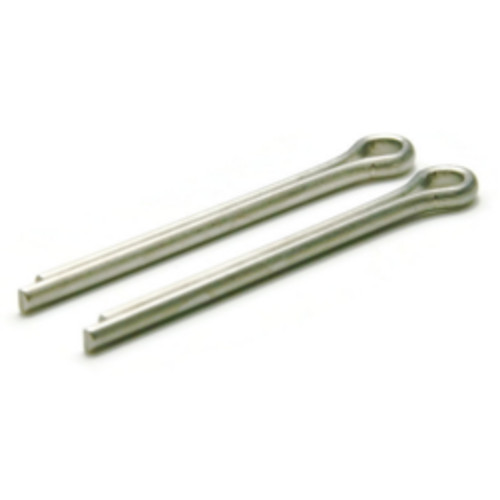
Stainless Steel Cotter Pins
What are stainless steel cotter pins? Stainless steel cotter pins are split, bendable pins pushed through a hole and spread open to lock a nut, clevis, or shaft in place and keep it from backing off. Made from stainless, they resist rust so they stay easy to bend, seat, and remove in wet and outdoor use.
How to size and install a cotter pin
Choose a cotter pin diameter that fits the drilled hole in the bolt or shaft with little slack, and a length long enough to bend both legs back over the nut or shaft. Push it through, then split and fold the legs to lock it. Cotter pins pair naturally with slotted and castle nuts, where the pin passes through both the nut slots and the bolt hole for positive, tool-free locking. Use a fresh pin on reassembly.
Why choose stainless steel cotter pins
- Positive locking: mechanically holds a nut or clevis without vibration back-off.
- Corrosion resistance: stays bendable and rust-free outdoors.
- Tool-free: installs and removes with simple pliers.
- Grade options: 18-8 for general use, 316 for salt and chloride exposure.
Common applications for stainless cotter pins
- Securing slotted and castle nuts
- Clevis pins and linkage connections
- Axle, wheel, and equipment hardware
- Marine and outdoor assemblies (use 316)
Stainless Steel Cotter Pins FAQ
What size cotter pin do I need?
Match the pin diameter to the drilled hole with minimal slack, and choose a length long enough to bend both legs back over the nut or shaft.
Can cotter pins be reused?
It is best to use a fresh pin each time. Bending work-hardens the legs, and a new pin gives a reliable lock.
What nuts work with cotter pins?
Slotted and castle nuts are designed for cotter pins. The pin passes through the nut slots and the bolt hole for positive locking.