

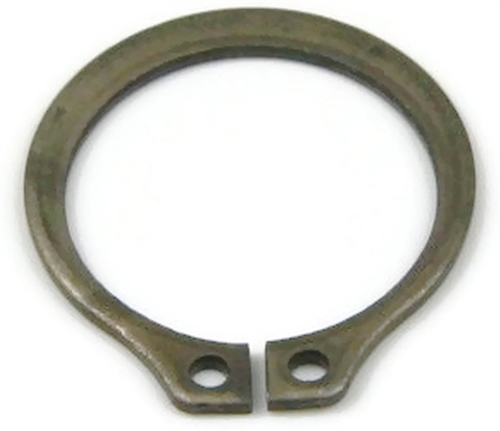
Stainless Steel External Retaining Rings
What are external retaining rings? External retaining rings seat in a groove around the outside of a shaft to hold parts against axial movement. Made from stainless, they resist rust and keep their spring tension so they hold bearings, gears, and pulleys on a shaft in wet and outdoor machinery.
How external rings install and hold
An external ring is expanded with pliers, slipped over the end of the shaft, and released into a machined groove where it grips the shaft and creates a shoulder that stops parts from sliding off. The groove dimensions and ring size must match for full thrust capacity. Because they install over the shaft end, they suit assemblies with open axial access. Stainless resists the corrosion that would otherwise weaken the ring's grip over time.
Why choose stainless steel external retaining rings
- Creates a shoulder: holds parts on a shaft against thrust.
- Corrosion resistance: keeps spring tension in wet and outdoor use.
- Reusable: can be removed and refitted with the right pliers.
- Grade options: 18-8 for general use, 316 for salt and chloride exposure.
Common applications for external retaining rings
- Retaining bearings and gears on shafts
- Pulleys, sprockets, and rollers
- Pivot pins and linkages
- Marine and outdoor machinery (use 316)
External rings pair with internal retaining rings for the matching bore side of an assembly, and you can browse the full range across every material on the main external retaining rings category. Install and remove them cleanly with retaining ring pliers.
Stainless Steel External Retaining Rings FAQ
How do I install an external retaining ring?
Expand the ring with external ring pliers, slide it over the shaft end, and release it into the machined groove so it grips the shaft.
What groove size do external rings need?
The groove diameter and width must match the ring specification for full thrust load capacity. Follow the ring maker's groove chart.
Can external retaining rings be reused?
They can if they are not overstressed during removal and still hold their spring tension. Replace any ring that looks bent or splayed.