

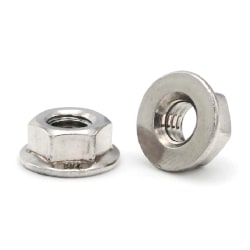
Stainless Steel Non-Serrated Flange Nuts
What are non-serrated flange nuts? Non-serrated flange nuts have a smooth flange face that spreads load like a built-in washer without marring the surface. Made from 304 and 316 stainless, they resist rust and are the flange nut of choice on soft or finished material where teeth would leave marks.
Where a smooth flange is the better choice
A non-serrated flange nut spreads clamping load over a wide, smooth bearing surface, which protects the material underneath. That makes it ideal on soft metals, plastics, and finished or visible surfaces where a serrated nut would dig in and scar the work. It does not lock on its own, so pair it with threadlocker or a separate locking method if vibration is a concern. Match the grade to the environment, with 304 for general use and 316 for coastal exposure.
Non-serrated vs serrated flange nuts
- Non-serrated: smooth face protects the surface, no locking action.
- Serrated: teeth lock against vibration but mark the surface.
- Both: spread load with a built-in flange, no separate washer needed.
Common applications for non-serrated flange nuts
- Soft metals and plastics that must not be scored
- Finished and visible surfaces
- General assembly needing load spread without a washer
- Marine and coastal fastening (use 316)
For vibration resistance, see stainless serrated flange nuts, and browse every flange nut style on the main flange nuts category.
Stainless Steel Non-Serrated Flange Nuts FAQ
What grades do non-serrated flange nuts come in?
304 and 316 stainless. Use 316 for coastal and saltwater exposure.
Do non-serrated flange nuts lock in place?
No. The smooth face does not resist loosening. In vibration, add threadlocker or use a separate lock nut or washer.
When should I pick non-serrated over serrated?
Choose non-serrated on soft, finished, or visible surfaces where the teeth of a serrated nut would leave marks.