

Stainless Steel Sheet Metal Screws
What are stainless steel sheet metal screws? Stainless steel sheet metal screws are fully threaded screws with sharp threads and a point that cut into sheet metal, plastic, or fiberglass. Made from stainless, they resist rust in wet and outdoor use and hold tight in thin material where a machine screw or wood screw will not grip.
Stainless Steel Sheet Metal Screws
Phillips Pan Head
Corrosion-resistant stainless sheet metal screws with a rounded pan head and Phillips drive, the general-purpose choice for thin metal.
Phillips Flat Head
Corrosion-resistant stainless sheet metal screws with a countersunk flat head and Phillips drive that sink flush into thin material.
Phillips Oval Head
Corrosion-resistant stainless sheet metal screws with a countersunk oval head and Phillips drive that sit near flush with a decorative crown.
Phillips Truss Head
Corrosion-resistant stainless sheet metal screws with a wide, low truss head and Phillips drive that spread load across thin material.
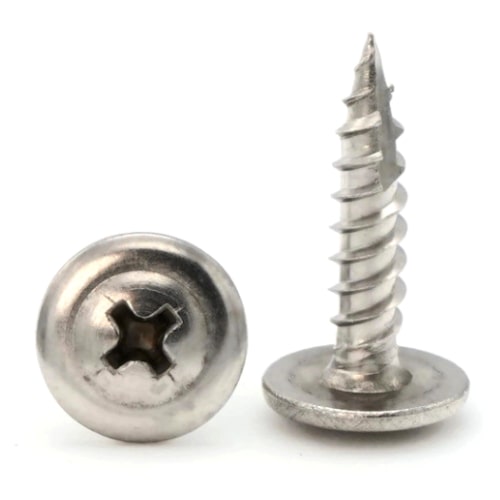
Phillips Modified Truss Head
Sheet metal screws with an extra-wide truss head and Phillips drive for maximum bearing surface on soft or thin material.
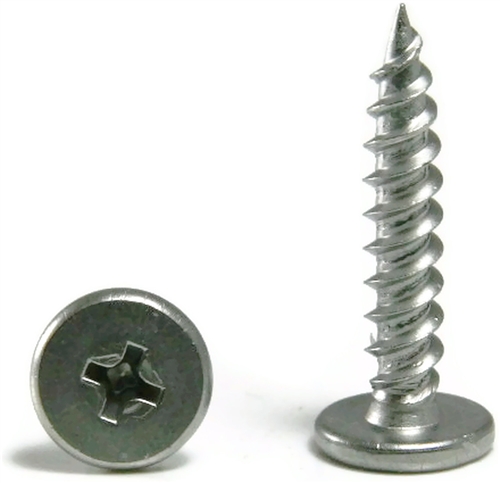
Phillips Pancake Head
Sheet metal screws with a very thin, wide flat head and Phillips drive, low enough to sit nearly flush under overlapping material.
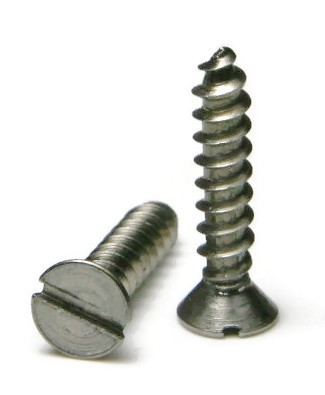
Slotted Flat Head
Countersunk sheet metal screws with a single slot for a flush finish, driven with a flat blade
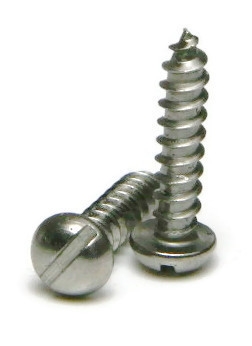
Slotted Round Head
Sheet metal screws with a rounded head that sits above the surface and a single slot for a wide bearing face.
Slotted Hex Washer Head
Corrosion-resistant stainless sheet metal screws with a hex washer head and slot, driven with a nut driver for high torque and a wide clamp.
Square Drive Pan Head
Corrosion-resistant stainless sheet metal screws with a rounded pan head and square drive that resists cam-out under higher torque.


Square Drive Truss Head
Wide truss-head sheet metal screws with a square drive combining high bearing area and cam-out resistance.
How to get a strong hold in sheet metal
Sheet metal screws are threaded all the way to the head with sharp, wide-spaced threads that bite thin material. Most need a pilot or punched hole sized so the threads cut without deforming the metal. Pan and hex washer heads sit on top for a strong bearing face, while flat and oval heads countersink for a flush finish. In stainless, they resist the rust that plagues plated screws in gutters, flashing, and outdoor sheet work. Choose 316 for coastal exposure.
Why choose stainless steel sheet metal screws
- Sharp biting threads: cut and hold in thin metal, plastic, and fiberglass.
- Corrosion resistance: resists rust in gutters, flashing, and outdoor sheet work.
- Head range: pan, flat, oval, truss, and hex washer for any finish.
- Grade options: 18-8 for general use, 316 for coastal exposure.
Common applications for stainless sheet metal screws
- Sheet metal, ductwork, and enclosures
- Gutters, flashing, and trim
- Plastic, fiberglass, and thin panels
- Marine and coastal sheet work (use 316)
For screws that drill their own hole in metal, see stainless self-drilling screws, and browse every head and finish on the main sheet metal and self-drilling screws category.
Stainless Steel Sheet Metal Screws FAQ
Do sheet metal screws need a pilot hole?
Most do. Drill or punch a hole sized so the sharp threads cut and grip without deforming the metal. Self-drilling screws skip this step.
What is the difference between sheet metal and self-drilling screws?
Sheet metal screws need a pilot hole, while self-drilling screws have a drill-point tip that bores its own hole and threads in one pass.
Should I use 18-8 or 316 sheet metal screws?
18-8 suits most outdoor sheet work. For coastal, saltwater, or marine exposure, choose 316 for the best corrosion resistance.