

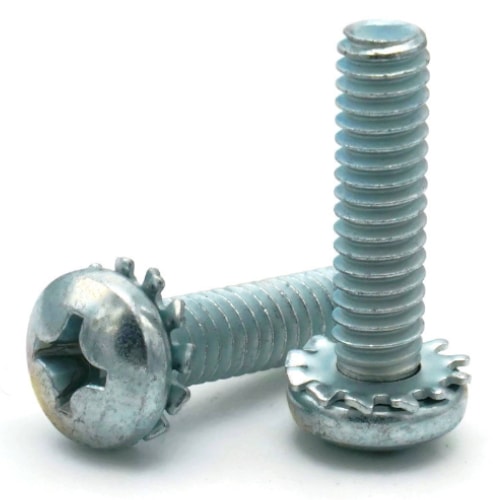
Zinc Plated SEMS Screws with External Lock Washers
What are Zinc Plated SEMS Screws with External Lock Washers? Zinc plated SEMS screws with external lock washers are machine screws with a preassembled, captive external tooth lock washer under the head. They are used with tapped holes, threaded inserts, or matching nuts to help resist loosening from vibration while reducing assembly time and keeping the screw and washer together as one fastener.
Why Choose Zinc Plated SEMS Screws with External Lock Washers?
Zinc plated SEMS screws with external lock washers are useful when an application needs a machine screw and lock washer installed together as one preassembled fastener. The captive washer stays with the screw, helping reduce loose hardware, simplify assembly, and speed up installation.
The external tooth lock washer helps bite into the mating surface to improve resistance to loosening caused by vibration or movement. This makes these screws a practical choice for equipment, panels, fixtures, brackets, and light-duty assemblies where a standard machine screw may loosen over time.
Common Uses for SEMS Screws with External Lock Washers
SEMS screws with external lock washers are commonly used in electrical equipment, appliance assembly, control panels, brackets, enclosures, sheet metal components, machinery covers, and general manufacturing applications.
They are often selected for production and maintenance work because the washer is already attached to the screw, which saves time compared to handling a separate screw and washer during installation.
How External Lock Washers Work
External tooth lock washers have teeth around the outside edge of the washer. When the screw is tightened, the teeth contact the mating surface and help create added grip under the screw head.
This design is helpful in applications where vibration, movement, or repeated handling could cause a plain machine screw to loosen. For softer or decorative surfaces, test the washer first because the teeth may leave marks on the material.
Phillips Pan Head SEMS Screw Benefits
Phillips pan head SEMS screws have a rounded head with a flat underside, giving them a clean appearance and a broad bearing surface under the head. The Phillips drive is widely used and works well for general assembly, repair, and production applications.
Pan head screws are a good choice when the screw head can remain slightly raised above the surface. For flush applications, a countersunk flat head screw style may be a better option.
Zinc Plated Steel SEMS Screws
Zinc plated steel SEMS screws are commonly used for general-purpose indoor fastening. The zinc finish gives the screw a clean appearance and provides light corrosion resistance in dry environments.
For outdoor, wet, marine, or corrosive environments, stainless steel or another corrosion-resistant fastener may be a better choice depending on the application.
How to Choose the Right Size
Match the screw diameter and thread pitch to the tapped hole, threaded insert, or nut being used. Machine screws require compatible mating threads, so the screw size must match the internal thread before installation.
Choose a length that provides enough thread engagement without bottoming out in a blind hole or extending too far beyond the nut or back side of the assembly. Also make sure the washer outside diameter has enough room to sit flat under the screw head without interfering with nearby edges or components.
Zinc Plated SEMS Screws with External Lock Washer FAQs
What is a SEMS screw?
A SEMS screw is a machine screw with a preassembled captive washer. The washer stays attached to the screw, helping simplify assembly and reduce loose parts.
What is an external lock washer used for?
An external lock washer uses teeth around the outside edge of the washer to help grip the mating surface and resist loosening from vibration or movement.
Are SEMS screws vibration resistant?
SEMS screws with lock washers can help resist loosening in vibration-prone applications, especially when properly matched to the tapped hole, threaded insert, or nut being used.
Do SEMS screws need a separate washer?
No. SEMS screws already have a washer assembled onto the screw, so a separate washer is usually not needed for the same function.
Are zinc plated SEMS screws good for outdoor use?
Zinc plated steel SEMS screws are best for dry indoor applications. For outdoor, wet, marine, or corrosive environments, stainless steel or another corrosion-resistant material is usually preferred.
What is the difference between external and internal lock washers?
External lock washers have teeth around the outside edge of the washer, while internal lock washers have teeth around the inside edge. External tooth washers are often used where a wider gripping area under the screw head is helpful.