

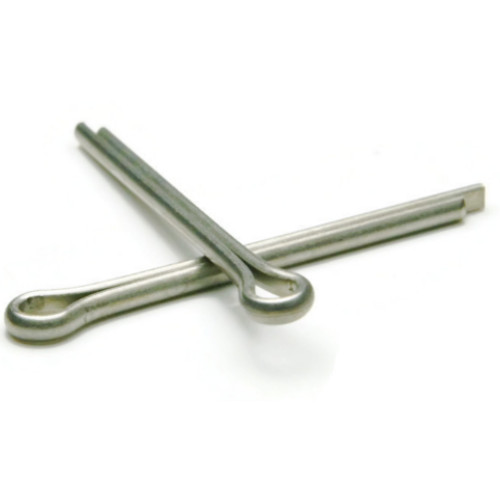
18-8 Stainless Steel Cotter Pins
What are 18-8 Stainless Steel Cotter Pins? 18-8 stainless steel cotter pins are split pin fasteners used to secure clevis pins, shafts, castle nuts, slotted nuts, and other pinned assemblies. They are inserted through a drilled hole and bent after installation to help keep the mating pin, nut, or component from backing out.
Why Choose 18-8 Stainless Steel Cotter Pins?
18-8 stainless steel cotter pins are useful when a pinned assembly needs a corrosion-resistant retaining fastener. The split pin design allows the cotter pin to pass through a hole and then be bent to help secure the connected hardware in place.
This category includes 18-8 stainless steel cotter pins in multiple diameters for general fastening, maintenance, equipment, marine-adjacent, outdoor, and assembly applications where stainless material is preferred.
Common Uses for 18-8 Stainless Steel Cotter Pins
18-8 stainless steel cotter pins are commonly used with clevis pins, shafts, hitch pins, slotted nuts, castle nuts, linkages, rods, pivots, equipment hardware, and mechanical assemblies.
They are often selected for applications where the pin or nut needs a simple mechanical retainer. Choose the cotter pin diameter and length based on the hole size, shaft or pin diameter, assembly thickness, and how much material is needed to bend the legs securely after installation.
How Cotter Pins Work
Cotter pins are inserted through a drilled hole in a pin, shaft, bolt, or nut slot. After insertion, the two legs of the cotter pin are bent apart to help prevent the pin or nut from moving out of position.
Cotter pins are typically considered single-use fasteners. Once a cotter pin has been bent and removed, it should usually be replaced with a new cotter pin of the correct size and material.
18-8 Stainless Steel Cotter Pins for Corrosion Resistance
18-8 stainless steel cotter pins are commonly selected when corrosion resistance is more important than a plain steel or zinc plated option. They are practical for many indoor, outdoor, damp, maintenance, and general-purpose applications where stainless steel is suitable.
For more corrosive environments, such as coastal, saltwater, chemical, or highly corrosive exposure, compare the application requirements with 316 stainless steel cotter pins or other corrosion-resistant pin materials.
18-8 Stainless Steel Cotter Pins vs 316 Stainless Steel Cotter Pins
18-8 stainless steel cotter pins are a common stainless option for general corrosion resistance. They are suitable for many maintenance, equipment, and outdoor applications where stainless steel is preferred.
316 stainless steel cotter pins provide improved corrosion resistance in more demanding environments, especially where salt, marine exposure, chemicals, or harsher conditions may be present. Choose the stainless grade based on the exposure level and project requirements.
18-8 Stainless Steel Cotter Pins vs Zinc Plated Cotter Pins
18-8 stainless steel cotter pins are made from stainless steel and are commonly selected for better corrosion resistance than zinc plated steel in many environments.
Zinc plated cotter pins are often used for dry indoor or less corrosive applications where a plated steel fastener is suitable. Choose the material based on moisture exposure, corrosion needs, mating hardware, and the application.
18-8 Stainless Steel Cotter Pins vs Brass Cotter Pins
18-8 stainless steel cotter pins are commonly used when stainless material, corrosion resistance, and general strength are preferred. They are a practical choice for many mechanical and maintenance applications.
Brass cotter pins may be selected for appearance, brass material compatibility, or applications where a softer, non-sparking, or corrosion-resistant brass fastener is preferred. Choose the material based on the mating parts, environment, and project requirements.
Cotter Pins vs Dowel Pins
Cotter pins are retaining fasteners that pass through a hole and are bent after installation to hold a pin, nut, or component in place. They are used as locking or retaining hardware.
Dowel pins are solid alignment pins used to locate, align, or join parts with precise positioning. Choose cotter pins for retention and dowel pins for alignment or locating applications.
Cotter Pin Sizes and Diameter Options
This category includes 18-8 stainless steel cotter pins in common diameters such as 3/64", 1/16", 5/64", 3/32", 7/64", 1/8", 5/32", 3/16", 1/4", 5/16", and 3/8".
Choose the cotter pin diameter based on the hole size in the mating pin, bolt, shaft, or nut. The cotter pin should fit through the hole without excessive force while still being large enough to retain the assembly properly.
How to Choose the Right 18-8 Stainless Steel Cotter Pin
Choose the 18-8 stainless steel cotter pin based on the hole diameter, pin diameter, shaft or bolt size, required length, material, corrosion resistance, and the assembly being retained.
If the application is general-purpose stainless retaining work, 18-8 stainless steel is often a practical choice. If the application is exposed to salt, chemicals, or harsher corrosion, compare 316 stainless steel cotter pins before choosing the final material.
Related Pin Categories
Browse related pin categories to compare 18-8 stainless steel cotter pins, 316 stainless steel cotter pins, brass cotter pins, zinc plated cotter pins, dowel pins, and other pin fasteners for retaining, alignment, and assembly applications.
- Pins
- Cotter Pins
- 18-8 Stainless Steel Cotter Pins
- 316 Stainless Steel Cotter Pins
- Brass Cotter Pins
- Zinc Plated Steel Cotter Pins
- Dowel Pins
- 18-8 Stainless Steel Dowel Pins
- 316 Stainless Steel Dowel Pins
18-8 Stainless Steel Cotter Pin FAQs
What are 18-8 stainless steel cotter pins?
18-8 stainless steel cotter pins are split pin fasteners used to secure clevis pins, shafts, castle nuts, slotted nuts, and other pinned assemblies.
When should I use 18-8 stainless steel cotter pins?
Use 18-8 stainless steel cotter pins when the application needs a corrosion-resistant retaining pin for general equipment, maintenance, outdoor, damp, or stainless hardware applications.
What sizes are available for 18-8 stainless steel cotter pins?
Available diameters on this page include 3/64", 1/16", 5/64", 3/32", 7/64", 1/8", 5/32", 3/16", 1/4", 5/16", and 3/8".
What is the difference between 18-8 and 316 stainless steel cotter pins?
18-8 stainless steel is a common stainless option for general corrosion resistance. 316 stainless steel is often preferred for more corrosive environments such as marine, coastal, salt, or chemical exposure.
Are cotter pins reusable?
Cotter pins are typically treated as single-use fasteners because they are bent during installation. Replace removed or previously bent cotter pins with new pins of the correct size and material.
How do I install a cotter pin?
Insert the cotter pin through the drilled hole or nut slot, then bend the two legs apart to help retain the assembly. Make sure the pin fits properly and does not interfere with nearby moving parts.
What is the difference between cotter pins and dowel pins?
Cotter pins are bent after installation to retain pins, nuts, or components. Dowel pins are solid pins used for alignment, locating, or precise positioning.
How do I choose the right 18-8 stainless steel cotter pin?
Choose the cotter pin based on the hole diameter, shaft or pin size, required length, material, corrosion resistance, and the assembly being retained.