

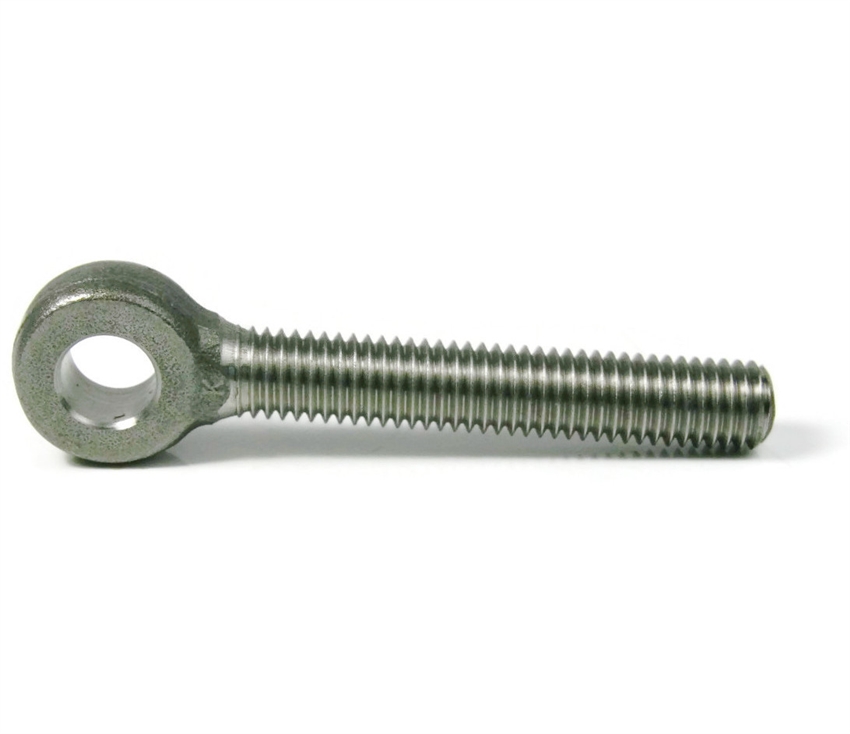
Why use 304 stainless for rod ends?
304 is the workhorse austenitic stainless, giving strong corrosion resistance for outdoor and freshwater use, so a 304 rod end keeps its strength and finish in damp or exposed linkages and rigging where carbon steel would rust. The rigid eye, with no internal bearing, makes a durable fixed connection point. These are USA made and drop forged for repeatable strength. Add a jam nut or approved locking method, align for straight loading, and use a pin matching the eye's inside diameter. Pair with 304 or 18-8 stainless mating hardware to keep the whole assembly corrosion resistant. For coastal or saltwater exposure, 316 stainless offers more resistance.
Why choose 304 stainless rod ends
- Corrosion resistant: 304 stainless resists rust in wet and outdoor use.
- Fixed connection: rigid eye with no bearing for a durable anchor.
- USA made: drop forged for repeatable strength.
- Non-staining: will not rust-streak the assembly.
Common applications for 304 stainless rod ends
- Outdoor and freshwater linkages
- Marine-adjacent brackets and rigging
- Tension rods and suspension parts
- Corrosion-exposed fixed connections
For higher strength, see 4140 alloy steel rod ends, and browse every material on the main rod ends category.
304 Stainless Rod Ends FAQ
Is 304 good for coastal use?
304 handles most outdoor and freshwater exposure but can pit in salt. For coastal or saltwater use, choose 316 stainless.
How should I secure a rod end?
Use a jam nut or approved locking method, align for straight loading, and recheck torque after initial run-in.
Can I mix stainless and carbon parts?
You can, but consider galvanic corrosion in wet or salty settings. For severe exposure, use stainless rod ends with stainless mating hardware.