

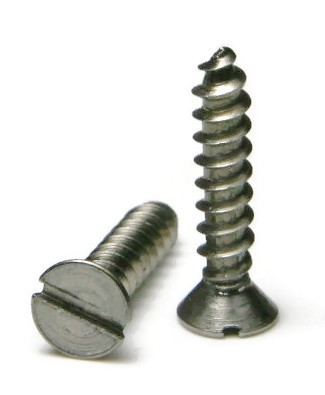
Slotted Flat Head Sheet Metal Screws
What are Slotted Flat Head Sheet Metal Screws? Slotted flat head sheet metal screws are self-tapping screws with a flat blade drive and a countersunk flat head designed to sit flush in a properly countersunk hole. They are commonly used to fasten sheet metal, plastic, wood, fiberglass, brackets, panels, covers, and light-gauge materials where the screw needs to form or cut its own mating threads during installation.
Videos
Play videoWhy Choose Slotted Flat Head Sheet Metal Screws?
Slotted flat head sheet metal screws are a practical choice when an application needs a self-tapping screw with a flush finished surface and a simple flat blade drive. The flat head is designed for countersunk holes, helping the screw sit flush or nearly flush with the material when properly installed.
The slotted drive can be installed with a standard flat blade screwdriver, making these screws useful for maintenance, repair, restoration, and general fastening work where a traditional drive style is preferred.
Common Uses for Slotted Flat Head Sheet Metal Screws
Slotted flat head sheet metal screws are commonly used for countersunk sheet metal panels, covers, brackets, fixtures, enclosures, trim, appliance repair, plastic components, fiberglass, wood, and general maintenance applications.
They are often selected when the screw head needs to sit flush with the surface. For applications where a raised head is acceptable, pan head, round head, truss head, or hex washer head sheet metal screws may be a better fit.
Flat Head and Slotted Drive Benefits
Flat head sheet metal screws are designed to seat into a countersunk hole for a smoother finished surface. This can help reduce snag points and improve the appearance of panels, covers, and assemblies where a raised fastener head is not desired.
The slotted drive is one of the most basic drive styles and can be useful when a flat blade tool is preferred or readily available. For faster installation or better driver engagement, compare Phillips, square drive, or hex washer head sheet metal screw options.
18-8 Stainless Steel Slotted Flat Head Options
18-8 stainless steel slotted flat head sheet metal screws are commonly used when general corrosion resistance and a clean finish are important. Stainless steel is a practical choice for many indoor and outdoor applications where plain or zinc plated steel may not be suitable.
For marine, coastal, chemical, or highly corrosive environments, 316 stainless steel may be a better option when available for the application.
How to Choose the Right Size
Choose a screw diameter and length based on the material thickness, holding strength needed, and available clearance behind the workpiece. The screw should be long enough to create secure thread engagement without protruding too far through the back side of the assembly.
A pilot hole may be needed depending on the material thickness, screw size, and installation method. For flat head screws, the mating surface should also be countersunk so the head can sit flush.
Sheet Metal Screws vs Machine Screws
Sheet metal screws are designed to create or cut mating threads in a prepared hole or compatible material. Machine screws are designed for use with pre-existing machine threads, such as a tapped hole, threaded insert, or matching nut.
Choose sheet metal screws when the screw needs to form threads in the material during installation. Choose machine screws when the application already has matching internal threads or will use a nut.
Related Sheet Metal Screw Categories
Browse related sheet metal screw categories to compare other head styles, materials, and drilling options for your application.
- Self Tapping & Self Drilling Sheet Metal Screws
- Sheet Metal Screws
- 18-8 Stainless Steel Slotted Flat Head Sheet Metal Screws
- Phillips Flat Head Sheet Metal Screws
- Slotted Round Head Sheet Metal Screws
- Slotted Hex Washer Head Sheet Metal Screws
Slotted Flat Head Sheet Metal Screw FAQs
What is a slotted flat head sheet metal screw?
A slotted flat head sheet metal screw is a self-tapping screw with a flat blade drive and a countersunk head designed to sit flush in a properly countersunk hole.
What are slotted flat head sheet metal screws used for?
They are used for countersunk sheet metal panels, covers, brackets, fixtures, enclosures, trim, plastic, fiberglass, wood, and general maintenance applications.
Do flat head sheet metal screws need a countersunk hole?
Yes. Flat head sheet metal screws are designed to sit flush in a properly countersunk hole. Without a countersink, the head will sit above the surface.
Do slotted sheet metal screws need a pilot hole?
A pilot hole is often recommended, especially in thicker metal, wood, plastic, or harder materials. The correct pilot hole helps the screw form threads properly and makes installation easier.
What is the difference between slotted and Phillips sheet metal screws?
Slotted sheet metal screws use a flat blade drive, while Phillips sheet metal screws use a cross-shaped drive. Phillips screws are often used for faster installation, while slotted screws may be preferred for simple tool access, restoration work, or traditional applications.
What is the difference between flat head and pan head sheet metal screws?
Flat head sheet metal screws are designed to sit flush in a countersunk hole, while pan head sheet metal screws have a rounded raised head with a flat underside.
What is the difference between sheet metal screws and machine screws?
Sheet metal screws form or cut threads into the material during installation. Machine screws are used with matching machine threads, such as a tapped hole, threaded insert, or nut.