

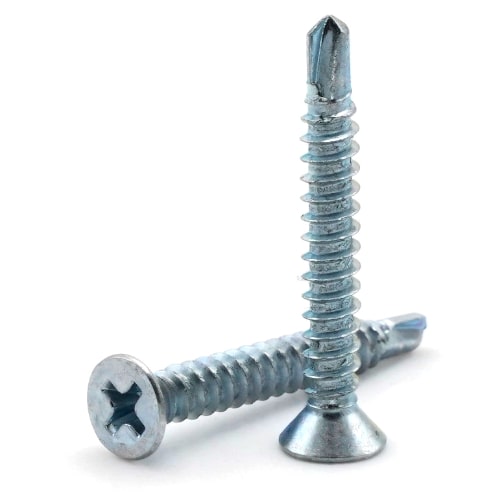
Zinc Plated Steel Phillips Flat Head Self Drilling Screws
What are Zinc Plated Steel Phillips Flat Head Self Drilling Screws? Zinc plated steel Phillips flat head self drilling screws are fasteners with a Phillips drive, zinc plated steel construction, a countersunk flat head, and a drill point that helps drill the pilot hole and form mating threads in one step. They are commonly used to fasten sheet metal, light-gauge metal, panels, brackets, fixtures, covers, and compatible materials where pre-drilling is not practical and a flush finished surface is needed.
Why Choose Zinc Plated Steel Phillips Flat Head Self Drilling Screws?
Zinc plated steel Phillips flat head self drilling screws are a practical choice when an application needs an economical fastener that can drill and fasten in one step. The drill point helps create the hole before the threads engage, reducing the need for separate drilling in compatible sheet metal and light-gauge materials.
The flat head is designed to sit flush in a properly countersunk hole, while the Phillips drive works with common screwdrivers and driver bits. The zinc plated finish provides a clean appearance and light corrosion resistance for dry indoor applications.
Common Uses for Zinc Plated Steel Phillips Flat Head Self Drilling Screws
These screws are commonly used for countersunk sheet metal panels, brackets, covers, fixtures, enclosures, HVAC work, appliance repair, light-gauge metal, and general maintenance applications.
Zinc plated steel is best suited for dry indoor environments. For outdoor, wet, marine, coastal, chemical, or highly corrosive environments, stainless steel, coated steel, or another corrosion-resistant fastener may be a better choice.
Flat Head and Phillips Drive Benefits
Flat head self drilling screws are designed to sit flush in a properly countersunk hole. This helps create a smoother finished surface and reduces the amount of exposed screw head above the material.
The Phillips drive is widely used and easy to match with common tools. For harder materials or production work, make sure the driver bit is seated properly to reduce slipping during installation.
Zinc Plated Steel Benefits
Zinc plated steel self drilling screws are commonly selected when an economical general-purpose fastener is needed for dry indoor use. The zinc finish provides a bright, clean look and light protection against corrosion in dry environments.
Zinc plated screws are not the best choice for harsh outdoor exposure, marine environments, or applications with regular moisture. For those conditions, stainless steel or a more protective coating is usually preferred.
Self Drilling Screws vs Sheet Metal Screws
Self drilling screws include a drill point that drills the hole before the threads engage. Standard sheet metal screws are self-tapping, but they usually need a prepared hole or compatible material for the threads to form properly.
Choose self drilling screws when you want the screw to drill and fasten in one step. Choose sheet metal screws when a pilot hole is already drilled, when the material requires a specific prepared hole, or when a drill point is not needed.
How to Choose the Right Size and TEK Point
Choose the screw diameter and length based on the material thickness, holding strength needed, and available clearance behind the workpiece. The screw should be long enough to drill through the top material and create secure thread engagement without protruding too far through the back side of the assembly.
Match the TEK point style to the material thickness and application. A TEK 2 point is commonly used for lighter-gauge material, while a TEK 3 point is used for thicker compatible material. The screw, drill point, and material thickness should be compatible so the fastener can drill cleanly, form threads properly, and seat without damaging the assembly.
Related Self Drilling Screw Categories
Browse related self drilling and sheet metal screw categories to compare other head styles, materials, and drilling options for your application.
- Self Tapping & Self Drilling Sheet Metal Screws
- Zinc Plated Self Drilling Screws
- Phillips Flat Head Self Drilling Screws
- 410 Stainless Steel Phillips Flat Head Self Drilling Screws
- Coated Steel Phillips Flat Head Self Drilling Screws
- Sheet Metal Screws
Zinc Plated Steel Phillips Flat Head Self Drilling Screw FAQs
What is a zinc plated steel Phillips flat head self drilling screw?
A zinc plated steel Phillips flat head self drilling screw is a fastener with zinc plated steel construction, a Phillips drive, countersunk flat head, and drill point that helps drill and fasten in one step.
What are zinc plated steel Phillips flat head self drilling screws used for?
They are used for countersunk sheet metal panels, brackets, covers, fixtures, enclosures, HVAC work, appliance repair, light-gauge metal, and general maintenance applications.
Do flat head self drilling screws need a countersunk hole?
Yes. Flat head self drilling screws are designed to sit flush in a properly countersunk hole. Without a countersink, the head will sit above the surface.
Do zinc plated self drilling screws need a pilot hole?
Self drilling screws are designed to drill their own hole in compatible materials. A pilot hole is usually not needed when the screw, drill point, and material thickness are properly matched.
Are zinc plated steel self drilling screws good for outdoor use?
Zinc plated steel self drilling screws are best for dry indoor applications. For outdoor, wet, marine, coastal, chemical, or highly corrosive environments, stainless steel, coated steel, or another corrosion-resistant option is usually preferred.
What is the difference between TEK 2 and TEK 3 screws?
TEK 2 screws are commonly used for lighter-gauge material, while TEK 3 screws are used for thicker compatible material. The correct choice depends on the material thickness and application.
What is the difference between flat head and pan head self drilling screws?
Flat head self drilling screws are designed to sit flush in a countersunk hole, while pan head self drilling screws have a raised rounded head with a flat underside.