

Why Choose Aluminum Tri-Fold Rivets?
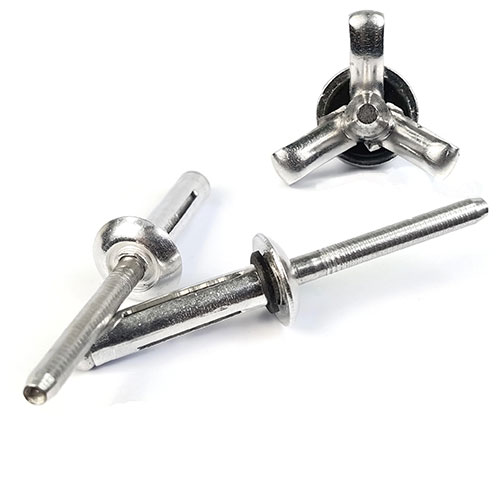
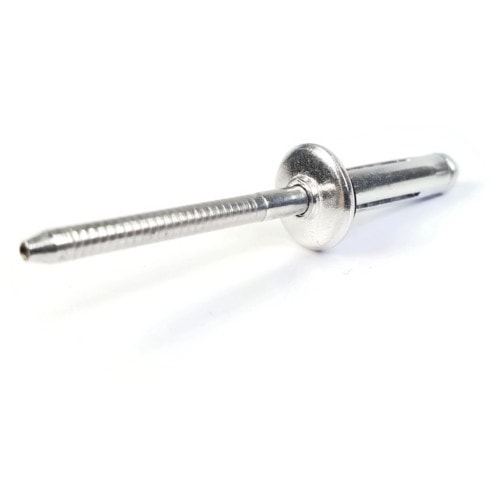
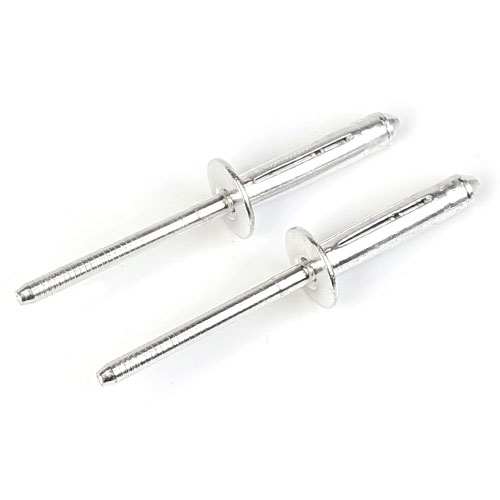
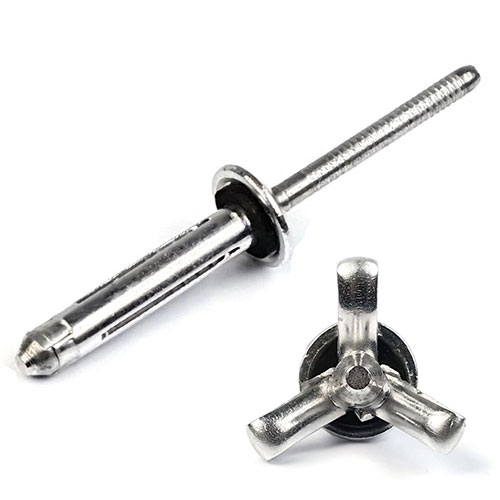
Aluminum tri-fold rivets are useful when an application needs a blind rivet that spreads load over a wider area behind the material. As the rivet sets, the body forms three legs on the back side of the assembly, helping distribute clamping force on thin, soft, brittle, or oversized-hole materials.
This category includes aluminum tri bulb rivets in dome head, recessed crown dome head, low profile flat head, and shave head styles. Available options include rivets with sealing washers in 5/32", 3/16", and 1/4" diameters depending on the product.
Common Uses for Aluminum Tri-Fold Rivets
Aluminum tri-fold rivets are commonly used for fastening panels, signs, plastics, fiberglass, sheet metal, soft materials, covers, enclosures, trim, trailers, equipment parts, and repair panels.
They are especially useful when the installer can only access one side of the assembly and the material needs more back-side support than a standard blind rivet provides. Choose the rivet diameter, grip range, head style, washer style, and tool compatibility based on the total material thickness and joint requirements.
How Aluminum Tri-Fold Rivets Work
Aluminum tri-fold rivets are installed with a compatible rivet tool. The rivet is inserted through a prepared hole, and the tool pulls the mandrel to expand the rivet body into three folded legs behind the material.
This back-side tri-fold shape helps spread load over a larger area than many standard blind rivets. Proper hole size, grip range, rivet diameter, and tool compatibility are important for a secure installation.
Tri Bulb Rivets for Soft or Thin Materials
Tri bulb rivets are often selected for materials that may crack, deform, or pull through with a smaller back-side bearing surface. The three-leg formation can help support plastics, fiberglass, thin panels, softer materials, and repair applications.
They can also be useful where the back side of the material is hidden or difficult to reach. Match the rivet style and grip range to the material stack so the tri-fold body forms correctly during installation.
Aluminum Tri-Fold Rivets with Sealing Washers
Some aluminum tri-fold rivets include sealing washers. A sealing washer can help cushion the joint and support applications where the fastener head needs a washered bearing surface.
A sealing washer does not replace a full gasket, sealant, or waterproofing system when those are required. Choose the rivet and washer style based on the panel material, exposure conditions, and finished assembly requirements.
Dome Head Aluminum Tri-Fold Rivets
Dome head aluminum tri-fold rivets provide a rounded finished head and a practical bearing surface for many panel, plastic, fiberglass, sign, cover, and repair applications.
Choose dome head tri-fold rivets when the rivet head can remain visible and a standard rounded head style is suitable for the job.
Recessed Crown Dome Head Aluminum Tri-Fold Rivets
Recessed crown dome head aluminum tri-fold rivets provide a dome-style head with a recessed crown design. These rivets are useful for applications where the head style, washered design, and tri-fold setting action match the panel or repair requirement.
Choose recessed crown dome head tri-fold rivets when the product dimensions, sealing washer, and finished head profile fit the application.
Low Profile Flat Head Aluminum Tri-Fold Rivets
Low profile flat head aluminum tri-fold rivets are useful when the finished head should sit lower than a standard dome head style. They can be selected for panels, covers, trim, and assemblies where a lower-profile appearance is preferred.
Confirm the head style, hole size, grip range, and material thickness before installation so the rivet seats and sets correctly.
Shave Head Aluminum Tri-Fold Rivets
Shave head aluminum tri-fold rivets are designed for applications where the rivet head style supports a smooth or finished appearance after installation. Some shave head options include sealing washers.
Choose shave head tri-fold rivets when the application calls for that head style and the rivet diameter, grip range, washer style, and tool compatibility match the job.
Aluminum Tri-Fold Rivets vs Standard Blind Rivets
Aluminum tri-fold rivets form three legs behind the material, helping spread load over a wider back-side area. Standard blind rivets usually create a smaller back-side bulb or expansion area.
Choose tri-fold rivets when the application needs more support behind thin, soft, brittle, or oversized-hole materials. Choose standard blind rivets when a typical open end, closed end, large flange, or countersunk rivet style is better suited to the joint.
Aluminum Tri-Fold Rivets vs Large Flange Rivets
Tri-fold rivets help spread load on the back side of the material by forming three legs. Large flange rivets help spread load on the front side of the material with a wider head.
Choose tri-fold rivets when back-side support is the main concern. Choose large flange rivets when the front side needs a wider bearing surface for thin material, softer material, plastics, oversized holes, or pull-through resistance.
Aluminum Tri-Fold Rivets vs Closed End Rivets
Aluminum tri-fold rivets are selected for their three-leg back-side formation and wider load distribution. Closed end rivets are selected when the application needs a more sealed rivet body to help reduce moisture, dirt, air, or debris from passing through the rivet.
Choose tri-fold rivets when support on soft or thin material is the main priority. Choose closed end rivets when a more sealed rivet body is more important.
Aluminum Tri-Fold Rivets for Lightweight Fastening
Aluminum tri-fold rivets are commonly selected for lightweight assemblies and aluminum-compatible applications. They are practical for many panels, signs, covers, plastics, fiberglass, trim pieces, enclosures, and light-duty fastening jobs.
Choose aluminum rivets when the material, strength requirements, installation force, exposure conditions, and finished appearance match the application. For higher-strength or more corrosive applications, compare stainless steel, steel, or other rivet materials before choosing.
Rivet Diameter and Grip Range Selection
Aluminum tri-fold rivets on this page are available in diameters including 5/32", 3/16", and 1/4" depending on the product.
Grip range is the total thickness range that the rivet is designed to fasten. Measure the combined thickness of the materials being joined, then choose a tri-fold rivet with a grip range that covers that thickness.
Rivet Tools for Aluminum Tri-Fold Rivets
Aluminum tri-fold rivets require a compatible rivet tool to pull the mandrel and set the rivet. The tool must support the rivet diameter, mandrel style, and installation force required for the product.
Before installation, confirm the rivet tool capacity, nosepiece size, rivet diameter, access space, and material thickness. For frequent rivet installation, compare hand riveters, lever riveters, air riveters, or cordless rivet tools based on the job.
How to Choose the Right Aluminum Tri-Fold Rivet
Choose the aluminum tri-fold rivet based on the rivet diameter, grip range, head style, washer style, hole size, joined materials, material softness, corrosion exposure, appearance requirements, and rivet tool compatibility.
If the material is thin, soft, brittle, plastic, fiberglass, or has an oversized hole, a tri-fold rivet may provide better back-side bearing support than a standard blind rivet. If the application needs more front-side bearing surface, compare large flange rivets. If the application needs a more sealed rivet body, compare closed end rivets.
Related Rivet Categories
Browse related rivet categories to compare aluminum tri-fold rivets, steel tri-fold rivets, aluminum open end rivets, aluminum large flange rivets, aluminum closed end rivets, multi-grip rivets, colored rivets, countersunk rivets, rivet washers, rivet tools, and rivet kits.
- Rivet Products
- Blind Rivets
- Tri-Fold Rivets
- Aluminum Tri-Fold Rivets
- Steel Tri-Fold Rivets
- Aluminum Open End Rivets
- Aluminum Large Flange Rivets
- Aluminum Closed End Rivets
- Multi-Grip Rivets
- Colored Rivets
- Countersunk Rivets
- Rivet Washers
- Rivet Tools
- Rivet Kits
Aluminum Tri-Fold Rivet FAQs
What are aluminum tri-fold rivets?
Aluminum tri-fold rivets are blind rivets that form three legs behind the material during installation to help spread load over a wider back-side area.
When should I use aluminum tri-fold rivets?
Use aluminum tri-fold rivets when the application needs one-sided fastening with extra back-side support for thin, soft, brittle, plastic, fiberglass, or oversized-hole materials.
What sizes are available for aluminum tri-fold rivets?
Visible aluminum tri-fold rivet diameters on this page include 5/32", 3/16", and 1/4" depending on the product.
What is the difference between tri-fold rivets and standard blind rivets?
Tri-fold rivets form three legs behind the material to spread load over a wider back-side area. Standard blind rivets usually create a smaller back-side bulb or expansion area.
What is the difference between tri-fold rivets and large flange rivets?
Tri-fold rivets spread load on the back side of the material. Large flange rivets spread load on the front side with a wider head.
Do aluminum tri-fold rivets include sealing washers?
Some visible aluminum tri-fold rivets on this page include sealing washers, including dome head, recessed crown dome head, and shave head options.
Do aluminum tri-fold rivets require a special tool?
Aluminum tri-fold rivets require a compatible rivet tool. Confirm that the tool supports the rivet diameter, mandrel style, and installation force needed for the product.
How do I choose the right aluminum tri-fold rivet?
Choose the rivet based on the rivet diameter, grip range, head style, washer style, hole size, joined materials, material softness, corrosion exposure, appearance requirements, and rivet tool compatibility.