

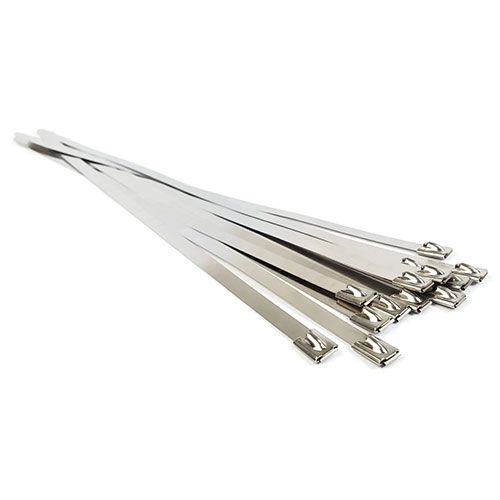
Why Choose Marine Grade Cable Ties?
Marine grade cable ties are selected for applications where moisture, weather, salt air or harsh outdoor exposure may be a concern. They are commonly used for securing wiring, hoses, conduit, signage, fencing, dock accessories, marine equipment, outdoor fixtures and general jobsite materials.
For demanding outdoor and coastal environments, material matters. Stainless steel cable ties are often selected where a metal tie is preferred for strength, temperature exposure or corrosion resistance. Nylon and UV-resistant cable ties may work well for many outdoor organizing and bundling tasks, but stainless steel options should be compared when the application involves harsher exposure, higher strength needs or longer-term outdoor use.
Choosing the Right Marine Grade Cable Tie
The right cable tie depends on the material being secured, the environment, the bundle diameter and the strength required. Before ordering, compare the listed length, width, tensile strength, material, coating, color and package quantity. For outdoor or marine applications, also consider sun exposure, salt air, abrasion, vibration and contact with dissimilar metals.
Stainless Steel Cable Ties
Stainless steel cable ties are a strong option for outdoor, coastal, industrial and marine-related applications. They are often used where a plastic tie may not be the best fit due to exposure, strength needs or installation conditions. 316 stainless steel is commonly selected for marine and chloride-exposed environments because it offers stronger corrosion resistance than many general-purpose stainless grades.
UV-Resistant and Nylon Cable Ties
UV-resistant black cable ties and nylon cable ties are useful for many bundling and organizing applications. Black UV-resistant ties are commonly chosen for outdoor use where sun exposure is a concern. Natural nylon cable ties are often used indoors or in protected areas. Always compare the listed material and rating before choosing a tie for outdoor or marine exposure.
Length and Tensile Strength
Cable tie length should match the bundle diameter with enough extra length for proper installation. Tensile strength indicates the approximate pull strength rating of the tie. Smaller ties are useful for light-duty bundling, while heavier-duty ties or stainless steel cable ties may be better suited for larger bundles, outdoor hardware or higher-demand applications.
Marine Grade Cable Tie Installation Considerations
Before installing cable ties, check that the tie is compatible with the bundle material and surrounding environment. Avoid over-tightening around soft hose, insulation or wiring that could be damaged by excess pressure. For stainless steel cable ties, use the proper installation method and protective handling as needed because cut metal edges may be sharp.
For wet, coastal or salt-exposed environments, check whether the cable tie material is compatible with nearby metals and mounting surfaces. In some applications, coated stainless steel cable ties or properly rated accessories may be preferred to reduce abrasion or contact concerns.
Related Cable Tie and Marine Grade Categories
Browse related cable tie and marine grade fastener categories to compare material, strength and application options.
Marine Grade Cable Ties FAQs
What are marine grade cable ties used for?
Marine grade cable ties are used for bundling, securing and organizing wire, hose, cable, conduit and materials in outdoor, dock, coastal, marine and moisture-prone applications.
Are stainless steel cable ties good for marine use?
Stainless steel cable ties are commonly selected for marine-related and outdoor applications where corrosion resistance and strength are important. For salt air or chloride exposure, compare 316 stainless steel options when available.
Are nylon cable ties marine grade?
Some nylon cable ties may be suitable for outdoor or protected applications, but nylon is not the same as stainless steel. For marine or coastal exposure, confirm the listed material, UV rating and application suitability before purchasing.
What does tensile strength mean on a cable tie?
Tensile strength refers to the approximate pull strength rating of the cable tie. Higher tensile strength ties are generally used for heavier bundles or more demanding applications.
What should I check before buying marine grade cable ties?
Check the material, length, width, tensile strength, bundle diameter, color, coating, pack quantity and whether the tie is suited for outdoor, UV, coastal or marine exposure.