

Anchors
What are Anchors?
Anchors are fasteners that create holding power in base materials where a standard screw or bolt would not grip on its own. Used in concrete, block, brick, drywall, plaster, wood, steel, and composites, anchors convert a drilled hole or expansion action into reliable pull-out and shear capacity.
Anchors
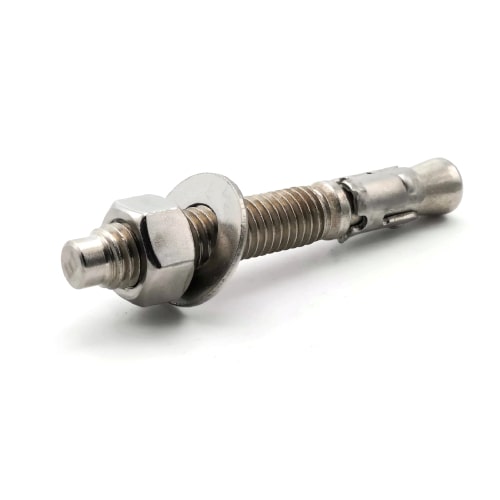
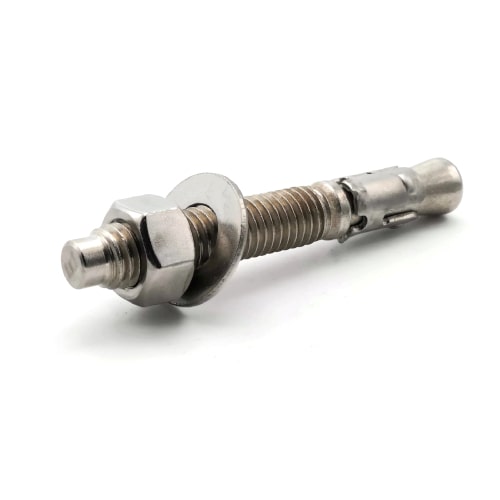
Wedge Anchors
Stud-type expansion anchors for solid concrete that lock in place as a clip expands against the hole when the nut is tightened, giving some of the highest holding values for heavy-duty fastening.
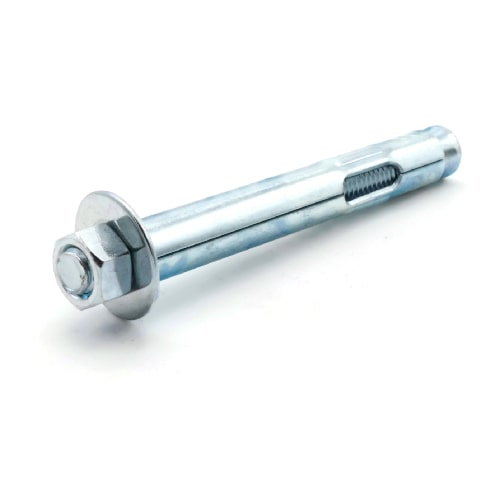
Sleeve Anchors
Versatile expansion anchors whose sleeve expands against the base material, working in concrete, brick, and block for light to medium-duty holds.
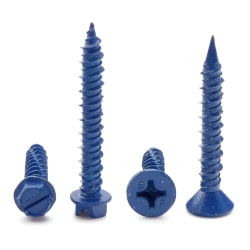
Screw Anchors
Self-tapping masonry anchors that cut their own threads into a pre-drilled hole in concrete, brick, or block for a removable, anchor-free hold.
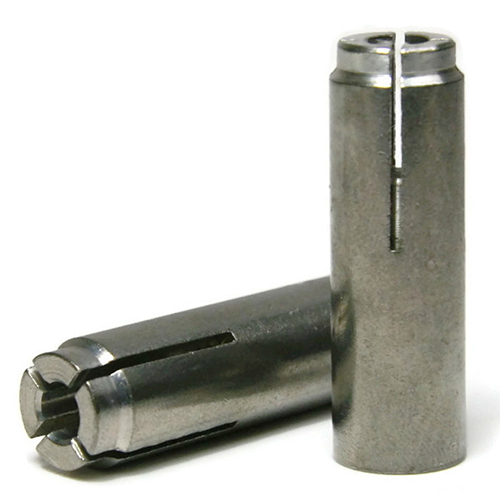
Drop In Anchors / Threaded Anchors
Internally threaded female anchors set flush in solid concrete, expanded with a setting tool to accept a bolt or threaded rod, common for overhead work.
.png?ts=1757453423 "Anchors for Wet Concrete (Blue Banger Hanger®)")
Anchors for Wet Concrete (Blue Banger Hanger®)
Drop-in-style anchors designed to be hammered into freshly poured or green concrete, setting a threaded hanger point for overhead fixtures.
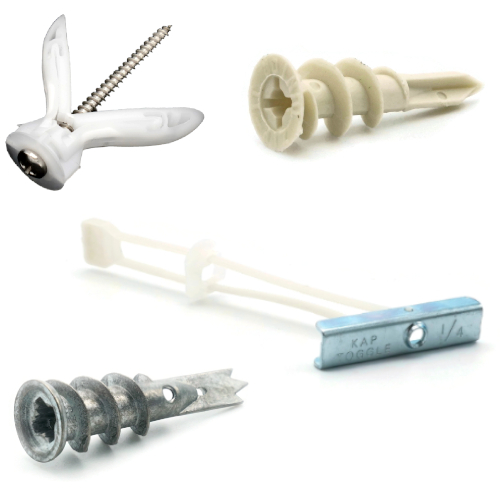
Anchors for Drywall & Plaster
Anchors that grip thin, hollow wall material like drywall and plaster, spreading load behind the surface where studs aren't available.
 (2).png?ts=1757453421 "Strike Anchors")
Strike Anchors
Stud-type anchors for solid concrete that expand when struck, giving consistent protrusion and a clean, uniform finished look across multiple anchors.
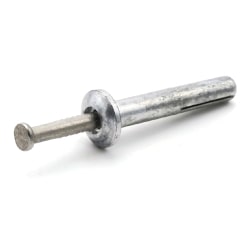
Hammer Drive Anchors
One-piece or pin-and-sleeve anchors driven with a hammer, expanding in the hole to fasten fixtures to masonry and concrete quickly.

Lag Shields
Internally threaded expansion anchors that accept a lag screw and expand in masonry or stone, available in short and long styles for hard or soft base material.
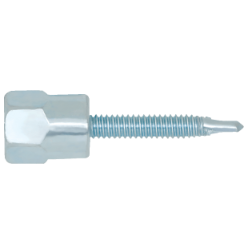
Anchors for Steel
Anchors designed to fasten into or onto steel framing and structural members.
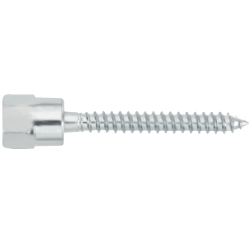
Anchors for Wood
Anchors and inserts that create a strong threaded or expanding hold in wood.
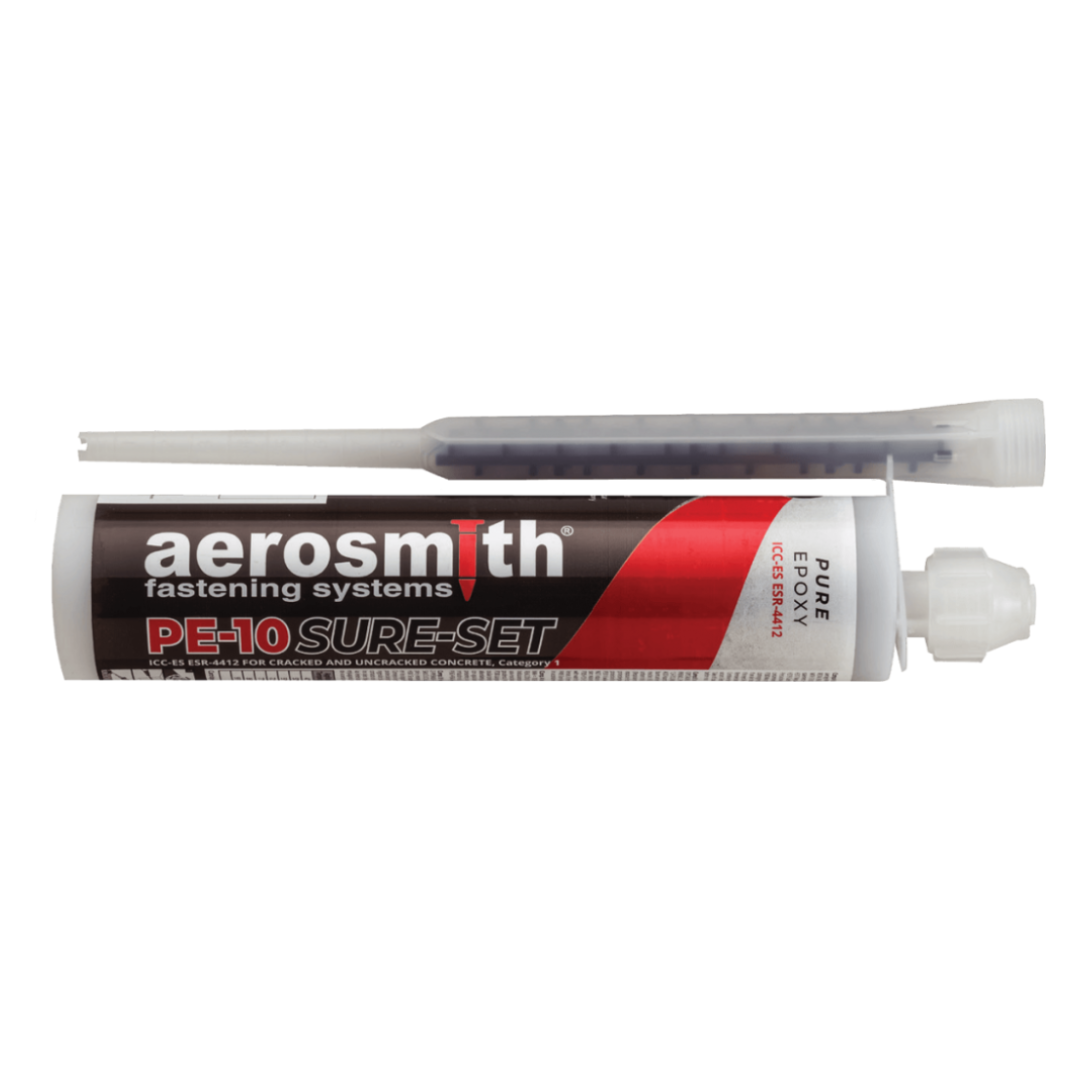
Adhesive Anchors
Threaded rod or rebar set into a drilled hole with epoxy or chemical adhesive for high-strength bonds in concrete and masonry.
Anchors for Concrete, Masonry, Drywall & More
Anchors are fasteners designed to create secure attachment points in materials where a standard screw or bolt alone may not provide sufficient holding power. Albany County Fasteners carries concrete anchors, masonry anchors, drywall anchors, hollow wall anchors, screw anchors, expansion anchors, and specialty anchoring systems for construction, industrial, commercial, and maintenance applications.
Choosing the correct anchor starts with the base material. Concrete, brick, block, drywall, plaster, and hollow walls require different anchoring methods, so the anchor should always be matched to the substrate, load, fixture, environment, and installation requirements.
Concrete Anchors
Concrete anchors are designed to fasten fixtures, equipment, structural components, supports, and other materials to concrete. Depending on the anchor type, holding power may be created through mechanical expansion, threads cut into the concrete, an internally threaded anchor body, or an adhesive bonding system.
Common types of concrete anchors include wedge anchors, sleeve anchors, drop-in anchors, concrete screws, and other mechanical or adhesive anchoring systems.
The correct concrete anchor depends on the required load, concrete condition, fixture thickness, anchor diameter, embedment depth, edge distance, spacing, environmental exposure, and whether the installation must be removable.
Types of Concrete Anchors
Wedge Anchors
Wedge anchors are heavy-duty mechanical expansion anchors designed primarily for solid concrete. Tightening the nut pulls the anchor's tapered section into an expansion clip, forcing the clip against the wall of the drilled hole.
Wedge anchors are commonly used for equipment bases, structural supports, railings, machinery, racking, posts, brackets, and other permanent concrete fastening applications.
Sleeve Anchors
Sleeve anchors use an expanding sleeve to develop holding power against the walls of a drilled hole. Unlike wedge anchors, sleeve anchors can be suitable for multiple masonry materials depending on the specific anchor.
They are commonly used in concrete, brick, and block for attaching brackets, rails, signs, electrical equipment, HVAC supports, and other fixtures.
Drop-In Anchors
Drop-in anchors are internally threaded concrete anchors installed flush with the surface. A setting tool expands the anchor inside the drilled hole, leaving female threads that accept a compatible bolt or threaded rod.
They are frequently used for suspended pipe, electrical systems, HVAC installations, threaded rod, ceiling applications, equipment supports, and other applications where a flush internal thread is useful.
Concrete Screws
Concrete screws create threads directly in a properly drilled pilot hole rather than relying on a separate expansion sleeve.
They provide a convenient one-piece fastening method for attaching brackets, electrical boxes, furring strips, fixtures, plates, and other components to compatible concrete and masonry.
Concrete Anchor Comparison
| Anchor Type | Typical Base Material | How It Holds | Common Applications |
|---|---|---|---|
| Wedge Anchor | Solid concrete | Expansion clip | Heavy-duty permanent fastening |
| Sleeve Anchor | Concrete, brick, block* | Expanding sleeve | General masonry fastening |
| Drop-In Anchor | Solid concrete | Internal expansion | Threaded rod and removable bolts |
| Concrete Screw | Concrete and compatible masonry* | Threads cut into pilot hole | One-piece removable fastening |
*Always verify that the specific anchor is approved or recommended for the base material and application.

What Is the Best Anchor for Concrete?
There is no single concrete anchor that is best for every application. The correct choice depends on the base material, required load, fixture, installation method, and environmental conditions.
- Heavy-duty fastening in solid concrete: Consider wedge anchors where appropriate.
- Concrete, brick, or block: Sleeve anchors may provide greater substrate versatility.
- Flush internal threads: Drop-in anchors create a threaded connection below or flush with the concrete surface.
- Fast, one-piece installation: Concrete screws can provide a convenient removable connection.
- Special engineering requirements: Adhesive anchoring systems may be specified for particular structural or installation conditions.
For structural, safety-critical, cracked-concrete, seismic, or other engineered applications, always use an anchor specifically approved for the application and follow the manufacturer's technical data and applicable engineering requirements.
Anchors for Concrete Block and Brick
Concrete block and brick require different considerations than solid poured concrete. Hollow sections, thin walls, mortar joints, and variations in masonry strength can affect anchor performance.
Sleeve anchors and other masonry-specific anchors may be appropriate depending on the base material. Wedge anchors, however, are generally intended for solid concrete and should not be installed in hollow block unless the specific product and installation conditions permit it.
Always verify whether an anchor is designed for solid concrete, filled block, hollow block, brick, or another masonry material before installation.
Drywall and Hollow Wall Anchors
Concrete anchors should not be used as substitutes for anchors designed specifically for hollow wall construction.
Drywall and plaster anchors use expanding, gripping, or toggling mechanisms to distribute load across or behind the wall material.
Common applications include shelves, mirrors, brackets, curtain hardware, wall-mounted accessories, and other fixtures where a wood or metal stud is not available at the desired mounting location.
How Do Concrete Anchors Work?
Different concrete anchors create holding power in different ways:
- Expansion anchors press outward against the walls of a drilled hole.
- Concrete screws form mating threads directly in the base material.
- Internally threaded anchors expand inside the hole and provide female threads for bolts or threaded rod.
- Adhesive anchors bond threaded rod or anchor elements to the base material using a compatible anchoring adhesive.
Because these anchoring methods behave differently, anchors should not be considered interchangeable simply because they share the same diameter.
How to Choose the Right Concrete Anchor
Consider the following before selecting an anchor:
- Base material: Concrete, brick, filled block, hollow block, drywall, or another substrate
- Concrete condition: Sound, cracked, uncracked, deteriorated, or otherwise specified
- Required load: Tension, shear, or combined loading
- Anchor diameter: Selected according to load and fixture requirements
- Embedment depth: Determines how deeply the anchor engages the base material
- Fixture thickness: Must be considered when selecting overall anchor length
- Edge distance: Anchors installed too close to an edge can contribute to concrete breakout
- Anchor spacing: Closely spaced anchors can affect one another's performance
- Environment: Interior, exterior, wet, coastal, chemical, or other corrosive exposure
- Installation requirements: Permanent, removable, flush, through-fastened, or internally threaded
Concrete Anchor Materials and Finishes
Zinc Plated Steel
Zinc plated carbon steel anchors are commonly used for dry interior applications where significant corrosion exposure is not expected.
Hot Dip Galvanized Steel
Hot dip galvanized anchors provide increased corrosion protection and are commonly selected for compatible exterior and moisture-exposed applications.
304 Stainless Steel
304 stainless steel provides strong general corrosion resistance for outdoor, wet, and many industrial environments.
316 Stainless Steel
316 stainless steel provides increased resistance to chloride-related corrosion and is commonly selected for coastal, marine, saltwater, and other demanding environments.
How to Size a Concrete Anchor
Anchor sizing involves more than choosing a diameter. The complete installation must account for:
- Required anchor diameter
- Fixture thickness
- Minimum required embedment
- Concrete or masonry thickness
- Hole diameter and depth
- Washer and nut requirements where applicable
- Edge distance and anchor spacing
The correct dimensions vary by anchor type and manufacturer. Always consult the technical specifications for the specific anchor being installed.
How to Install Concrete Anchors
- Choose the correct anchor: Match the anchor to the base material, load, fixture, and environment.
- Verify the drill bit: Use the specified bit diameter and type for the anchor.
- Drill to the required depth: Maintain the specified embedment and hole depth.
- Clean the hole: Remove drilling dust according to the anchor manufacturer's installation instructions.
- Insert the anchor: Follow the installation method required for the specific anchor design.
- Set or tighten the anchor: Expansion anchors may require specified installation torque, while drop-in anchors require the appropriate setting tool.
- Inspect the installation: Confirm proper seating, embedment, alignment, and fixture attachment.
Common Concrete Anchor Installation Problems
- Wrong drill bit diameter: Can prevent the anchor from developing proper holding power.
- Insufficient embedment: May significantly reduce anchor capacity.
- Poor hole cleaning: Drilling dust can interfere with proper installation for many anchor types.
- Over-tightening: Can damage the anchor, fixture, or surrounding concrete.
- Incorrect base material: An anchor designed for solid concrete may not work properly in hollow masonry.
- Insufficient edge distance: Can increase the risk of concrete cracking or breakout.
- Wrong material or finish: Can result in premature corrosion in wet, coastal, or chemically aggressive environments.
Concrete Anchors vs. Concrete Screws
The term concrete anchor describes a broad family of fastening systems used in concrete. A concrete screw is one specific type of concrete fastener.
Expansion anchors such as wedge anchors and sleeve anchors create holding power by expanding against the drilled hole. Concrete screws instead cut mating threads into the concrete or compatible masonry.
Concrete screws can be advantageous when a relatively fast, one-piece, and potentially removable fastening method is desired. Expansion anchors may be preferred for other applications depending on load and installation requirements.
Concrete Anchors vs. Masonry Anchors
Concrete anchors are anchors intended for concrete, while masonry anchors is a broader term that can include fasteners designed for concrete, brick, block, and other masonry materials.
Not every masonry anchor is appropriate for every masonry substrate. Always confirm the specific base materials listed for the anchor before installation.
Frequently Asked Questions About Concrete Anchors
What are concrete anchors?
Concrete anchors are fasteners or anchoring systems designed to secure fixtures and components to concrete. Common types include wedge anchors, sleeve anchors, drop-in anchors, concrete screws, and adhesive anchoring systems.
What is the strongest type of concrete anchor?
There is no universally strongest concrete anchor. Capacity depends on anchor design, diameter, embedment, concrete strength and condition, spacing, edge distance, installation quality, and the type of load. Use manufacturer load data and engineering requirements to select an anchor for critical applications.
What anchors should I use for concrete?
Wedge anchors, sleeve anchors, drop-in anchors, and concrete screws are common options. The correct choice depends on the load, fixture, concrete condition, required embedment, installation method, and whether the connection needs to be removable.
What is the difference between a wedge anchor and a sleeve anchor?
Wedge anchors use an expansion clip near the embedded end and are primarily intended for solid concrete. Sleeve anchors expand along a sleeve and can be suitable for concrete, brick, or block depending on the specific product.
Can I use concrete anchors in brick?
Only anchors specifically recommended for brick should be used. Some sleeve and masonry anchors can be appropriate for brick, while wedge anchors are generally intended for solid concrete.
Can concrete anchors be used in concrete block?
Some concrete and masonry anchors can be used in block, but the correct anchor depends on whether the block is solid, hollow, or grout-filled. Verify the approved base materials for the specific anchor.
How deep should a concrete anchor go?
Required embedment varies by anchor type, diameter, load, and manufacturer. Use the minimum embedment and installation requirements specified for the particular anchor rather than applying one depth to all concrete anchors.
What size drill bit do I need for a concrete anchor?
Drill bit size depends on the anchor design and diameter. Many mechanical anchors require a specific hole diameter, so always use the bit size listed in the manufacturer's installation specifications.
Can concrete anchors be removed?
It depends on the anchor. Concrete screws can generally be removed, while wedge anchors are considered permanent installations. Internally threaded anchors may remain embedded while the attached bolt or threaded rod is removed.
What concrete anchors should I use outdoors?
Choose an anchor material and finish appropriate for the environment. Hot dip galvanized or stainless steel may be appropriate for exterior applications, while 316 stainless steel is often preferred for coastal, saltwater, and chloride-rich environments.
Can I install anchors in cracked concrete?
Only use an anchor specifically tested and approved for cracked concrete when the application requires that qualification. Do not assume that a standard concrete anchor is suitable for cracked concrete.
How close can a concrete anchor be to the edge?
Minimum edge distance depends on the anchor, diameter, embedment, concrete properties, and load. Follow the manufacturer's published technical data and applicable engineering requirements.