

Nut & Washer Specifications
Complete sizing charts and specifications for hex nuts, lock nuts, flat washers, and specialty fasteners - US and metric dimensions
Downloadable Reference Guides
Quick access to all nut and washer specification charts
US Hex Nut Sizes
Hex nuts are the most common type of nut, featuring six sides for wrench engagement. Available in various grades and finishes to match bolt specifications.
| Size | Width Across Flats (WAF) |
Width Across Corners (WAC) |
Thickness | Thread Pitch |
|---|---|---|---|---|
| #4-40 | 1/4" (6.35mm) | 0.289" | 3/32" (2.38mm) | 40 TPI |
| #6-32 | 5/16" (7.94mm) | 0.361" | 7/64" (2.78mm) | 32 TPI |
| #8-32 | 11/32" (8.73mm) | 0.397" | 1/8" (3.18mm) | 32 TPI |
| #10-24 | 3/8" (9.53mm) | 0.433" | 1/8" (3.18mm) | 24 TPI |
| 1/4"-20 | 7/16" (11.11mm) | 0.505" | 7/32" (5.56mm) | 20 TPI |
| 5/16"-18 | 1/2" (12.70mm) | 0.577" | 17/64" (6.75mm) | 18 TPI |
| 3/8"-16 | 9/16" (14.29mm) | 0.650" | 21/64" (8.33mm) | 16 TPI |
| 7/16"-14 | 11/16" (17.46mm) | 0.794" | 3/8" (9.53mm) | 14 TPI |
| 1/2"-13 | 3/4" (19.05mm) | 0.866" | 7/16" (11.11mm) | 13 TPI |
| 5/8"-11 | 15/16" (23.81mm) | 1.083" | 35/64" (13.89mm) | 11 TPI |
| 3/4"-10 | 1-1/8" (28.58mm) | 1.299" | 41/64" (16.27mm) | 10 TPI |
| 7/8"-9 | 1-5/16" (33.34mm) | 1.516" | 3/4" (19.05mm) | 9 TPI |
| 1"-8 | 1-1/2" (38.10mm) | 1.732" | 55/64" (21.83mm) | 8 TPI |
Understanding Nut Grades
- Grade 2: Low carbon steel, no markings - for general purpose, low-stress applications
- Grade 5: Medium carbon steel, marked with 3 radial lines - for automotive and machinery
- Grade 8: Alloy steel, marked with 6 radial lines - for high-stress structural applications
- Important: Always match nut grade to bolt grade for proper performance
Metric Hex Nuts
Metric hex nuts follow ISO standards with property class markings indicating strength compatibility with metric bolts.
| Size | Width Across Flats (WAF) |
Width Across Corners (WAC) |
Thickness | Thread Pitch |
|---|---|---|---|---|
| M3 | 5.5mm | 6.35mm | 2.4mm | 0.5mm |
| M4 | 7mm | 8.08mm | 3.2mm | 0.7mm |
| M5 | 8mm | 9.24mm | 4.7mm | 0.8mm |
| M6 | 10mm | 11.55mm | 5.2mm | 1.0mm |
| M8 | 13mm | 15.01mm | 6.8mm | 1.25mm |
| M10 | 16mm | 18.48mm | 8.4mm | 1.5mm |
| M12 | 18mm | 20.78mm | 10.8mm | 1.75mm |
| M14 | 21mm | 24.25mm | 12.8mm | 2.0mm |
| M16 | 24mm | 27.71mm | 14.8mm | 2.0mm |
| M20 | 30mm | 34.64mm | 18.0mm | 2.5mm |
Metric Property Classes
- Class 8: Medium carbon steel - general purpose applications
- Class 10: Alloy steel - high-strength automotive and machinery
- Class 12: Alloy steel - highest strength structural applications
- Stainless A2/A4: Corrosion-resistant for outdoor and marine use
Types of Nuts
Different nut designs serve specific purposes - from locking mechanisms to decorative finishes and specialized applications.
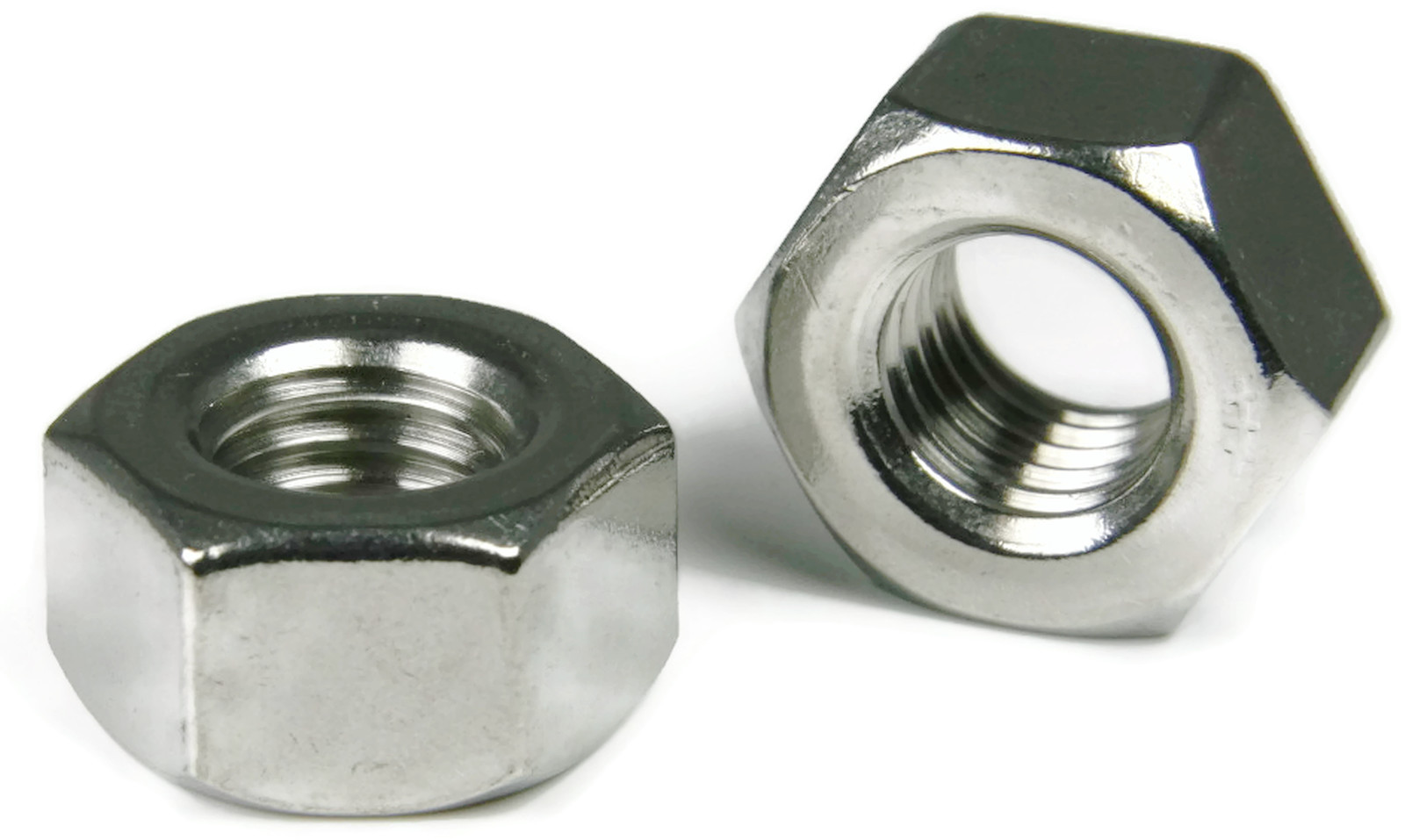
Hex Nut (Standard)
Features: Six-sided, general purpose
- Most common nut type
- Six flat sides for wrench engagement
- Available in all grades and materials
- Finish nuts (thinner) and heavy hex nuts (thicker) available
- Best for: General fastening, all applications
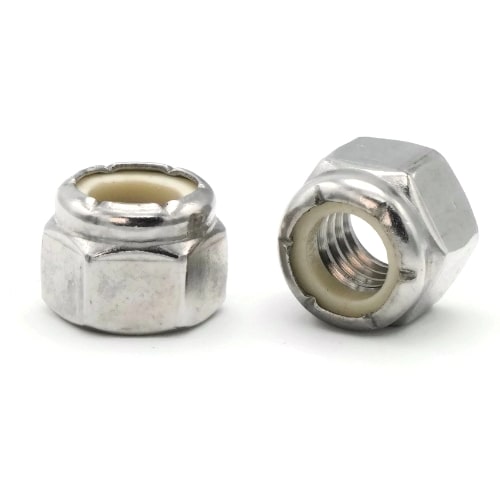
Nylon Insert Lock Nut (Nylock)
Features: Nylon collar prevents loosening
- Nylon insert grips bolt threads
- Resists vibration loosening
- Reusable 2-3 times before replacement
- Temperature limit: 250°F (121°C)
- Best for: Automotive, machinery, vibration-prone applications
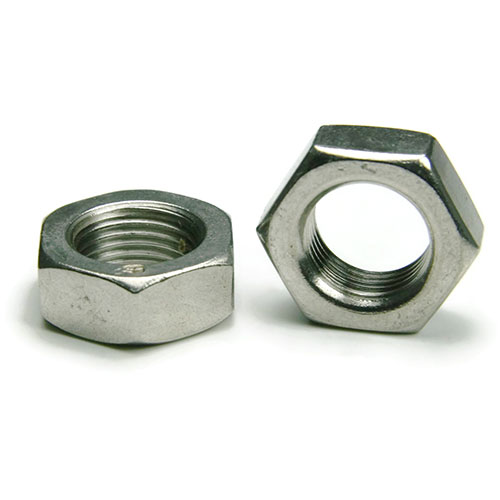
Jam Nut (Half Height)
Features: Thinner profile, half normal height
- Approximately 1/2 thickness of standard nut
- Used with standard nut as lock nut
- Saves space in tight assemblies
- Lower holding power than full nuts
- Best for: Double-nutting, limited space applications
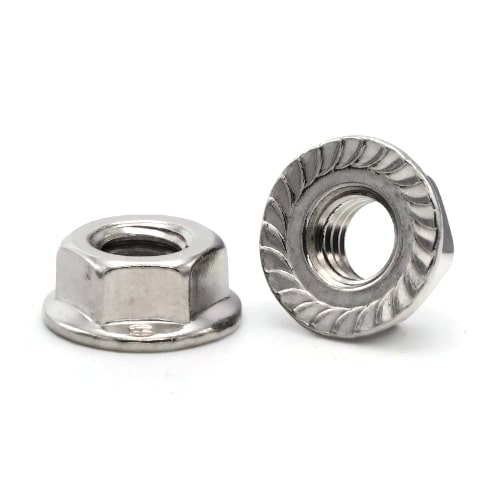
Flange Nut
Features: Built-in washer flange
- Integrated washer distributes load
- Serrated or non-serrated flange
- Eliminates need for separate washer
- Often with nylon insert for locking
- Best for: Automotive, electronics, preventing surface damage
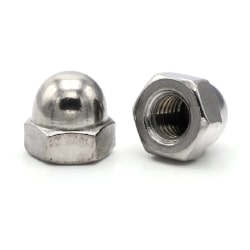
Cap Nut (Acorn Nut)
Features: Domed top covers bolt end
- Decorative domed appearance
- Protects threads from damage
- Prevents injury from exposed threads
- Available in chrome and stainless finishes
- Best for: Visible fastening, decorative applications

Wing Nut
Features: Wings for hand tightening
- Two large tabs for finger tightening
- No tools required
- Quick assembly/disassembly
- Lower torque capacity
- Best for: Temporary fastening, adjustments, panels
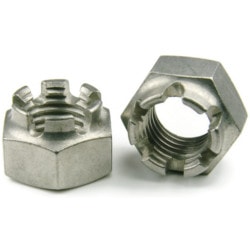
Castle Nut
Features: Slotted top for cotter pin
- Notched crown with slots
- Secured with cotter pin through bolt hole
- Prevents loosening permanently
- Common in automotive steering/suspension
- Best for: Critical safety applications, steering linkage
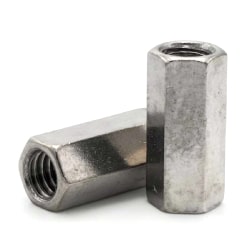
Coupling Nut
Features: Threaded on both ends, no head
- Internally threaded rod connector
- Joins two threaded rods together
- Hex exterior for wrench tightening
- Various lengths available
- Best for: Extending threaded rod, making adjustable connections

Square Nut
Features: Four-sided design
- Four flat sides instead of six
- Greater bearing surface area
- Resists turning in square holes
- Traditional machinery applications
- Best for: Wood, machinery with square pockets
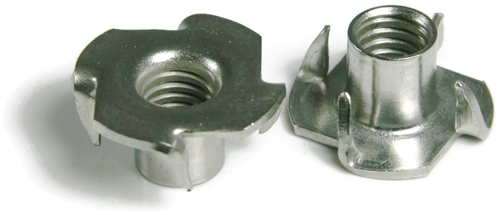
T-Nut (Tee Nut)
Features: Pronged nut for wood
- Barrel with external flange and prongs
- Driven into wood from one side
- Creates strong threaded insert
- Common in furniture and rock climbing holds
- Best for: Wood applications, furniture, fixtures

Keps Nut (K-Lock)
Features: Integrated lock washer
- Free-spinning lock washer attached to nut
- Washer cannot be separated
- Prevents loosening from vibration
- Faster assembly than separate washer
- Best for: Electrical panels, sheet metal, quick assembly
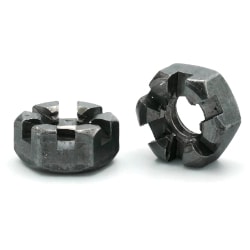
Slotted Hex Nut
Features: Slots for cotter pin or wire
- Standard hex nut with slots cut in top
- Used with cotter pin or safety wire
- Prevents backing off
- Adjustable positioning with slots
- Best for: Aviation, critical machinery, safety applications
Download Nut Types Comparison
Print this guide to choose the right nut for your application
Washer Specifications
Washers distribute load, prevent surface damage, act as spacers, and provide locking mechanisms. Choosing the right washer is essential for proper fastener performance.
Flat Washers (US Standard)
Flat washers distribute load over a larger area and protect surfaces from damage during tightening.
| Bolt Size | Inside Diameter (ID) |
Outside Diameter (OD) |
Thickness |
|---|---|---|---|
| #6 | 0.156" (3.96mm) | 0.375" (9.53mm) | 0.049" (1.24mm) |
| #8 | 0.188" (4.78mm) | 0.438" (11.11mm) | 0.049" (1.24mm) |
| #10 | 0.219" (5.56mm) | 0.500" (12.70mm) | 0.049" (1.24mm) |
| 1/4" | 0.281" (7.14mm) | 0.625" (15.88mm) | 0.065" (1.65mm) |
| 5/16" | 0.344" (8.74mm) | 0.688" (17.48mm) | 0.065" (1.65mm) |
| 3/8" | 0.406" (10.31mm) | 0.812" (20.62mm) | 0.065" (1.65mm) |
| 7/16" | 0.469" (11.91mm) | 0.922" (23.42mm) | 0.065" (1.65mm) |
| 1/2" | 0.531" (13.49mm) | 1.062" (26.97mm) | 0.095" (2.41mm) |
| 5/8" | 0.656" (16.66mm) | 1.312" (33.32mm) | 0.095" (2.41mm) |
| 3/4" | 0.812" (20.62mm) | 1.469" (37.31mm) | 0.134" (3.40mm) |
Washer Types
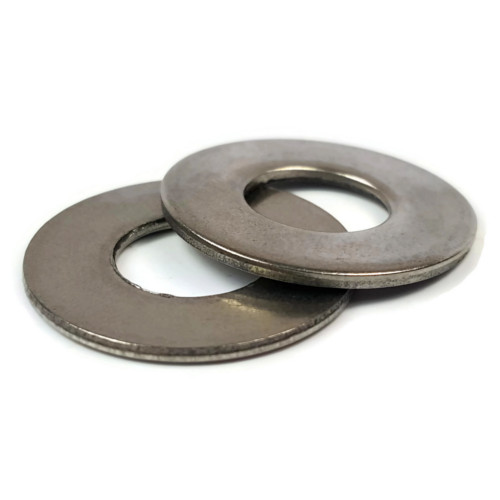
Flat Washer (Standard)
Function: Load distribution
- Circular with center hole
- Distributes bolt/nut load
- Prevents surface damage
- Standard (SAE) or wide (USS) pattern
- Best for: All general fastening applications
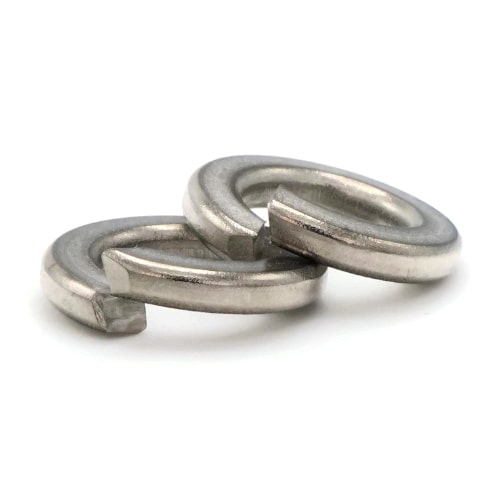
Split Lock Washer
Function: Vibration resistance
- Split ring with angled ends
- Compresses and bites into surfaces
- Prevents loosening from vibration
- Creates spring tension
- Best for: Machinery, automotive, equipment
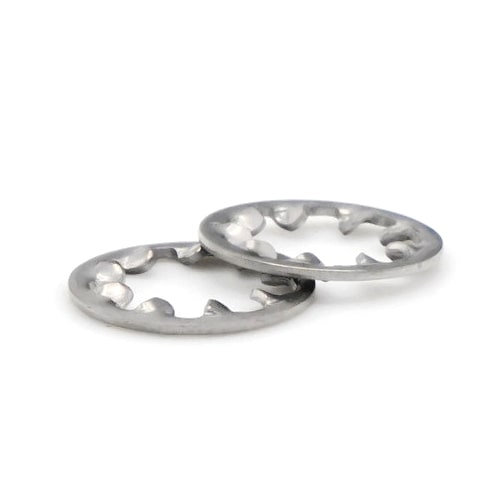
Internal Tooth Lock Washer
Function: Locking with internal teeth
- Teeth on inside diameter
- Grips bolt head or nut
- Prevents rotation
- Minimal surface marking
- Best for: Electrical connections, terminals
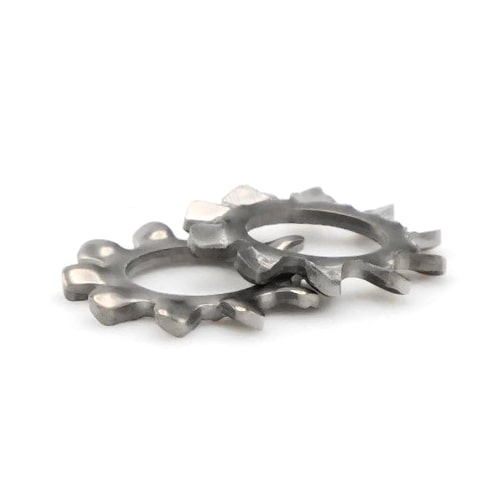
External Tooth Lock Washer
Function: Locking with external teeth
- Teeth on outside diameter
- Large grounding surface
- Excellent for electrical grounding
- Bites into mating surface
- Best for: Electrical boxes, grounding applications
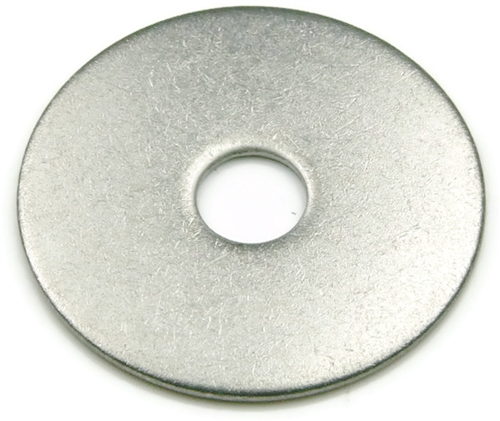
Fender Washer
Function: Extra-large bearing surface
- Oversized outside diameter
- Standard center hole
- Prevents pull-through
- 3-4x larger than standard washers
- Best for: Soft materials, thin sheet metal, body panels
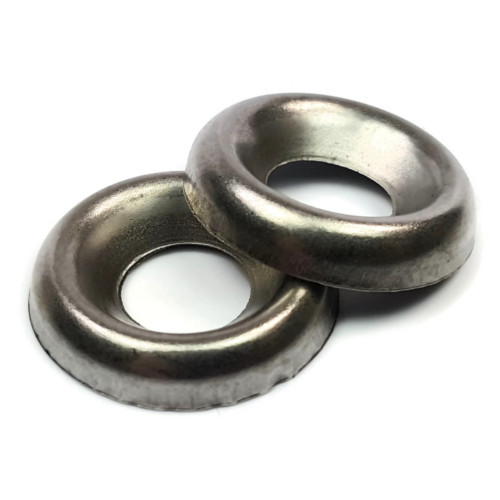
Finishing Washer (Countersunk)
Function: Decorative flush installation
- Countersunk top, flat bottom
- Accepts flathead screws
- Creates finished appearance
- Often chrome or brass plated
- Best for: Visible fastening, decorative hardware
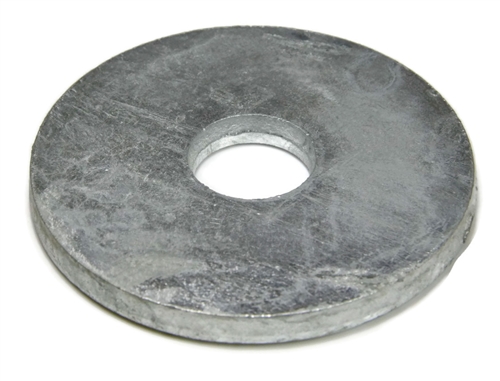
Dock Washer (Ogee Washer)
Function: Curved for timber connections
- Curved, dome-shaped design
- Accommodates angled connections
- Large bearing area
- Heavy-duty construction
- Best for: Dock construction, timber framing, lag screws
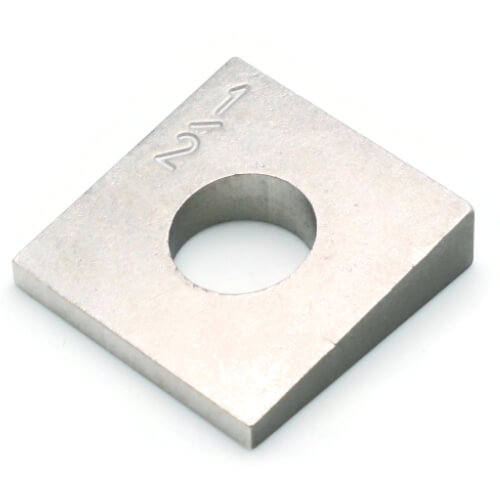
Square Washer
Function: Maximum bearing area
- Square shape, centered hole
- Greater surface area than round
- Won't roll on sloped surfaces
- Used with structural bolts
- Best for: Timber connections, structural applications

Wave Washer
Function: Maintains spring tension
- Wavy profile provides spring force
- Compensates for thermal expansion
- Maintains bolt tension
- Light to medium loads
- Best for: Bearings, spacing, thermal expansion compensation
Selection Guide & Best Practices
Matching Nuts to Bolts
Critical Rule: Nut grade must match or exceed bolt grade
- Grade 2 Bolt → Grade 2 or higher nut
- Grade 5 Bolt → Grade 5 or Grade 8 nut
- Grade 8 Bolt → Grade 8 nut only
- Metric Class 8.8 Bolt → Class 8 or Class 10 nut
- Metric Class 10.9 Bolt → Class 10 or Class 12 nut
- Using a lower-grade nut will fail before the bolt reaches full strength
When to Use Each Nut Type
Vibration-Prone Applications
- Use nylon insert lock nuts (Nylock)
- Or use prevailing torque nuts
- Alternatively: standard nut with split lock washer
- Consider thread-locking compound for critical applications
- Examples: Automotive, machinery, engines, equipment
Decorative/Visible Locations
- Use cap nuts (acorn nuts) for covered threads
- Flange nuts for integrated appearance
- Chrome or stainless finish for visual appeal
- Finishing washers with flathead screws
- Examples: Furniture, motorcycle parts, railings
Critical Safety Applications
- Castle nuts with cotter pins
- Slotted hex nuts with safety wire
- All-metal lock nuts for high temps
- Never reuse locking hardware
- Examples: Steering, suspension, aircraft, lifting equipment
Frequent Adjustments
- Wing nuts for hand-tightening
- Knurled nuts for finger grip
- Coupling nuts for adjustable lengths
- Standard hex nuts with easy wrench access
- Examples: Clamps, jigs, temporary fixtures, panels
Washer Selection Guide
Always Use Flat Washers
- Under bolt heads and nuts
- With soft materials (wood, plastic, composites)
- On slotted or oversized holes
- To bridge gaps or irregularities
- When surface finish matters
Use Lock Washers
- On vibrating machinery
- Automotive applications
- Electrical connections (tooth washers)
- Under nuts (not under bolt heads with split lock)
- Replace if damaged or compressed flat
Special Applications
- Fender washers for thin sheet metal
- Dock washers for timber with lag screws
- Finishing washers for visible screws
- Square washers for structural timber
- Wave washers for bearing preload
Installation Best Practices
Proper Washer Stack-Up
Correct Order (from bolt head out):
- Bolt head
- Flat washer (optional but recommended)
- First component
- Second component (if applicable)
- Flat washer (always under nut)
- Lock washer (if used)
- Nut
Note: Never put lock washers under both the bolt head and nut
Torque Specifications
- Always follow manufacturer's torque specs
- Use calibrated torque wrench for critical applications
- Reduce torque by 25% for lubricated threads
- Nylon lock nuts require ~30% more torque
- Over-torquing can strip threads or crack nuts
- Under-torquing allows loosening
Important Safety Notes
- Never substitute a lower-grade nut for a higher-grade bolt
- Do not reuse nylon insert lock nuts - nylon loses effectiveness
- Replace lock washers if compressed flat or damaged
- Always use washers under nuts on wood to prevent embedment
- Check critical fasteners periodically for tightness
- Use corrosion-resistant materials in outdoor/marine environments
Shop Nuts & Washers
Find the perfect nuts and washers for your project