

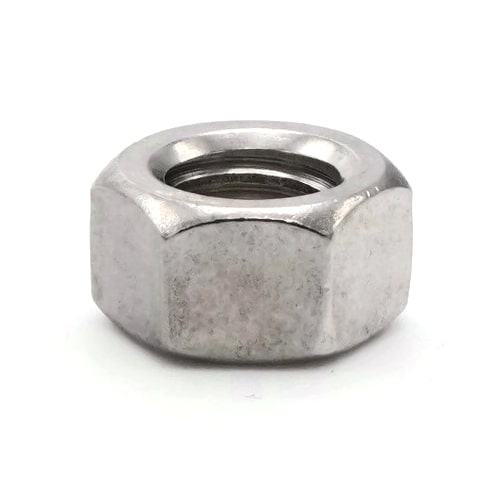
A4 Stainless Steel Metric Hex Finish Nuts
Quick Answer: What are A4 stainless metric hex finish nuts?
A4 stainless steel metric hex finish nuts are standard full-height hex nuts made from A4 (316 equivalent) stainless steel, designed for general-purpose fastening in harsh environments. They pair with metric bolts, screws, studs, and threaded rod, and are commonly used in marine, coastal, outdoor, and chemical-exposed applications where corrosion resistance is critical.
A4 stainless steel metric hex finish nuts are a dependable choice for everyday fastening where long-term corrosion resistance matters. Manufactured from A4 stainless steel, comparable to 316 stainless steel, these nuts are widely considered marine grade and perform well in applications exposed to moisture, salt air, washdown conditions, and many chemicals. They are commonly selected when standard stainless (A2, 304, 18-8) may stain, pit, or corrode over time.
Often referred to as metric hex nuts or metric finish nuts, these are the most common nut style for threaded assemblies. Their full-height design provides solid thread engagement and reliable clamping force when installed with proper torque and thread engagement. With metric threading, they are compatible with metric bolts and screws used in international and industrial equipment.
Why Choose A4 Stainless Steel Metric Hex Finish Nuts?
- Superior corrosion resistance: Excellent in wet, salty, and harsh outdoor environments
- Marine-grade stainless: A4 (316 equivalent) is preferred for coastal and marine applications
- Standard full-height nut: Reliable thread engagement for general-purpose fastening
- Metric compatibility: Designed for metric bolts, machine screws, studs, and threaded rod
- Clean finished appearance: Ideal for visible installations and professional assemblies
Common Applications
A4 stainless metric hex finish nuts are used across a wide range of assemblies where corrosion resistance and long-term durability are required, including:
- Marine hardware, docks, and boat equipment
- Outdoor and coastal construction assemblies
- Industrial equipment, brackets, frames, and machinery
- Food processing and washdown environments
- Fastening threaded rod, studs, and metric bolts in humid environments
- General hardware builds requiring a standard metric hex nut
Assembly Tips
For best results, confirm the metric diameter and thread pitch (example: M6-1.0, M8-1.25, M10-1.5) and ensure sufficient thread engagement. In vibration-prone applications, consider using a locking method such as a nylon insert lock nut, serrated flange nut, threadlocker, or a jam nut, depending on your load and environment.
A2 vs A4 Stainless Steel Hex Nuts
A2 stainless steel (304, 18-8 equivalent) is a great option for general indoor and non-marine outdoor use. A4 stainless steel (316 equivalent) offers improved resistance to corrosion and pitting, making it the better choice for marine, coastal, chemical-exposed, and washdown environments.
Frequently Asked Questions
What are metric hex finish nuts?
Metric hex finish nuts are standard full-height hex nuts designed to pair with metric bolts, screws, studs, and threaded rod. They are commonly used for general-purpose fastening in metric-based assemblies.
What does A4 stainless steel mean?
A4 stainless steel is an austenitic stainless alloy comparable to 316 stainless steel, often considered marine grade because it offers strong corrosion resistance in wet, salty, and chemical-exposed environments.
Are A4 stainless hex nuts suitable for marine use?
Yes. A4 (316 equivalent) stainless steel is widely used for marine and coastal applications because it performs well in salt air and wet conditions.
Do hex finish nuts require a washer?
Washers are not always required, but they can help distribute load, protect surfaces, and reduce galling in stainless assemblies. Washer selection depends on the application, surface material, and load requirements.
How do I choose the correct metric hex nut size?
Match the nut to the bolt thread size and pitch, for example M6-1.0, M8-1.25, or M10-1.5. If you are replacing existing hardware, confirm the diameter and pitch to ensure proper fit.