

ALLEN KEY SPECIFICATIONS
Complete dimensional specifications for imperial and metric allen keys — hex key sizes, arm lengths, bend radius, and chamfer dimensions for proper tool selection
Precision Allen Key Reference
Our comprehensive allen key specification charts provide exact dimensions for both imperial (inch) and metric hex keys. These detailed reference charts include hex width across flats, hex width across corners, short and long arm lengths, radius of bend, and chamfer specifications to ensure you select the proper tool size.
Allen Key Size Charts
Complete specifications for imperial and metric hex keys with socket compatibility
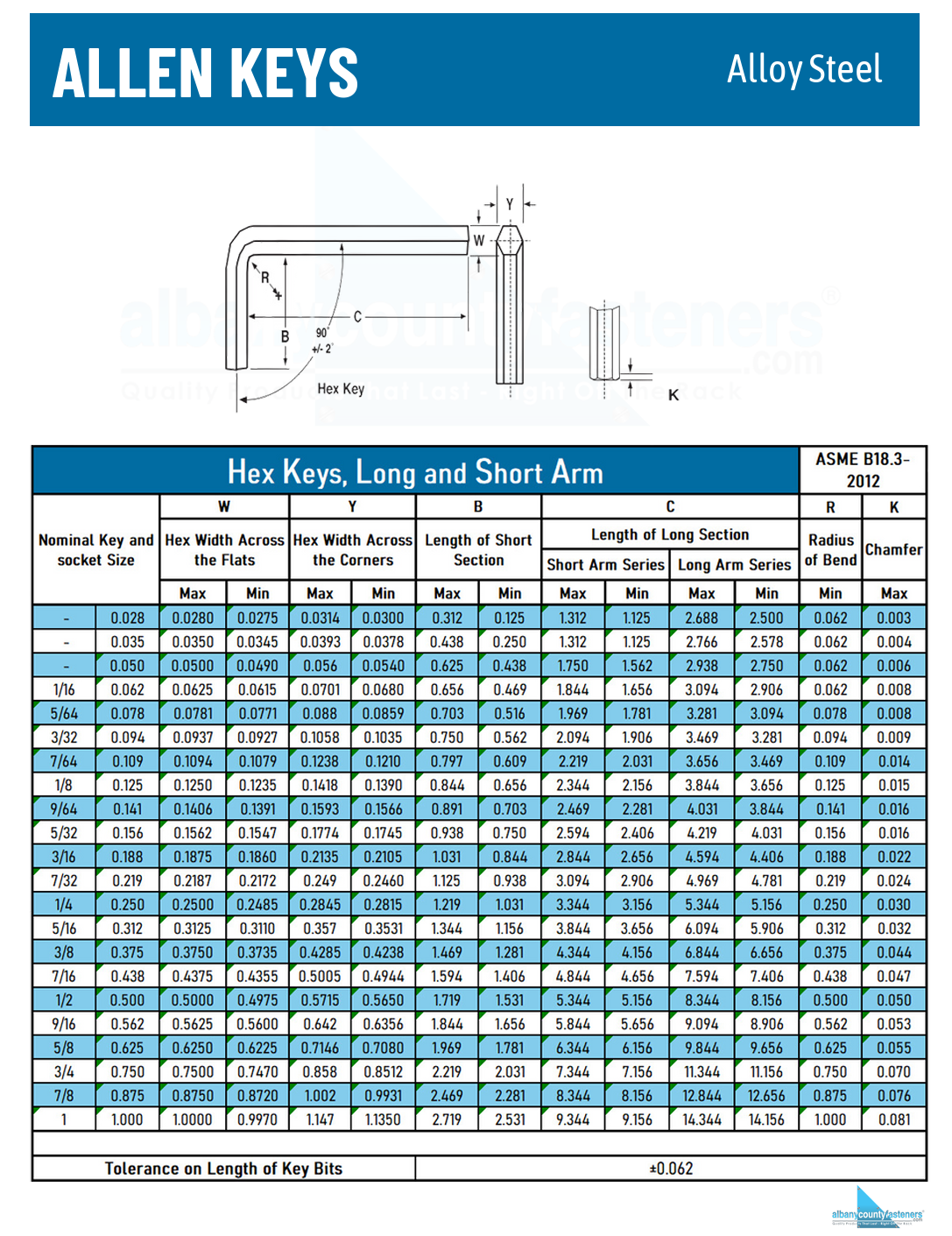
Imperial Allen Key Specifications
Complete inch-size hex key dimensions including hex width across flats, hex width across corners, short arm length, long arm length, radius of bend, and chamfer specifications conforming to ASME B18.3-2012 standards.
Download PDF Chart →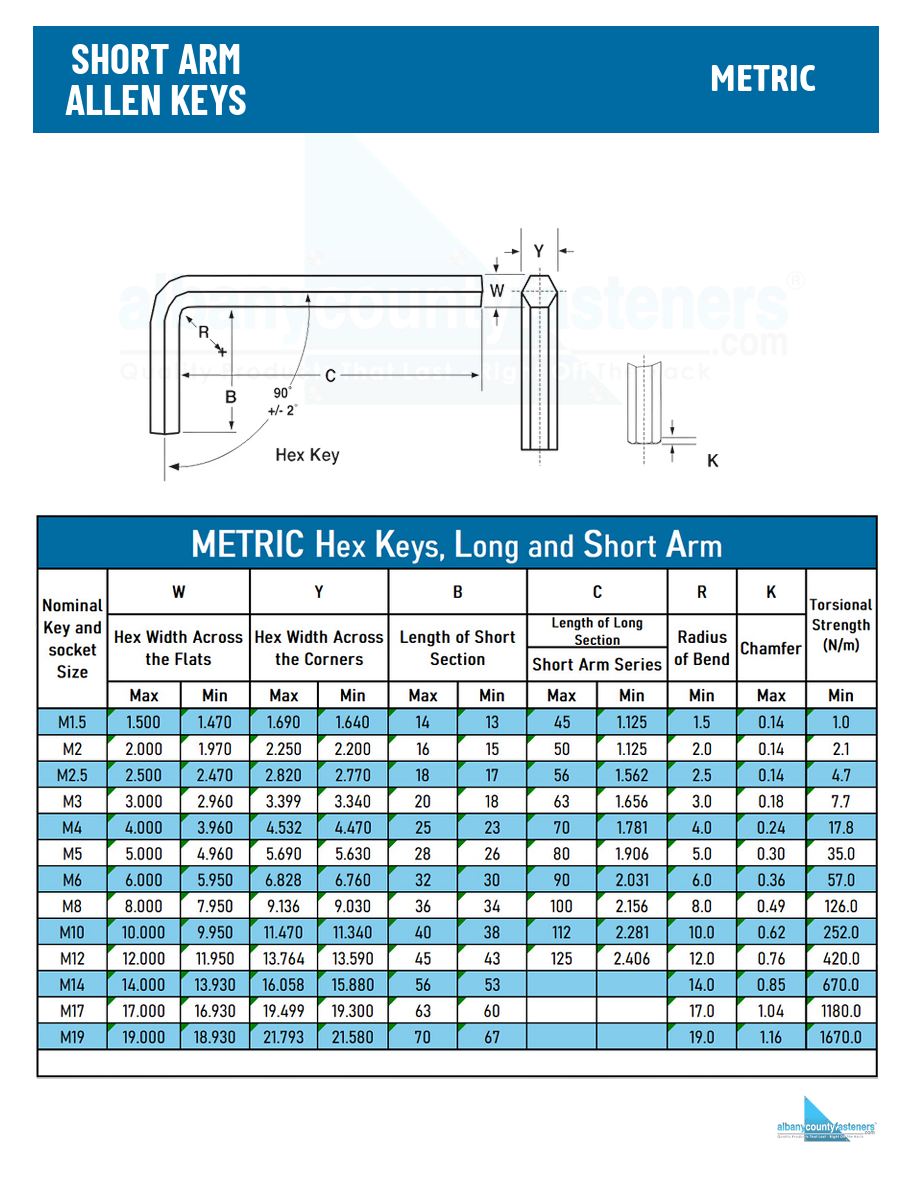
Metric Allen Key Specifications
ISO metric hex key dimensions including hex width across flats, hex width across corners, short arm length, long arm length, radius of bend, chamfer, and torsional strength ratings for proper tool selection.
Download PDF Chart →Understanding Allen Keys (Hex Keys)
What Are Allen Keys?
Allen keys, also called hex keys or hex wrenches, are L-shaped tools with hexagonal ends used to drive socket head cap screws and set screws. The hexagonal shape provides excellent torque transfer and prevents cam-out, making them ideal for high-torque applications.
Sizing Terminology
Across Flats: The distance measured across the flat sides of the hexagon—this is the key size (e.g., 5/32" or 4mm). Short Arm: The shorter leg of the L-shape for tight spaces. Long Arm: The longer leg providing increased leverage for greater torque.
Key Dimensions Explained
W (Across Flats): The hex key size measured across flat sides. B (Short Arm): Length of shorter leg for tight spaces. C (Long Arm): Length of longer leg for leverage. R (Radius): Bend radius. K (Chamfer): End chamfer dimension.
How to Use These Specifications
1. Identify Screw Size
Determine your socket head cap screw or set screw thread size (e.g., 1/4"-20 or M6) to find the required allen key size.
2. Find Key Dimensions
Use our charts to look up the exact hex key size across flats and verify short/long arm lengths for your application clearance.
3. Select Proper Tool
Choose between short arm (tight spaces) or long arm (increased torque) based on your access requirements and torque needs.
Allen Key Selection Tips
Use the Correct Size
Always use the exact size allen key specified for your fastener. Undersized or oversized keys will round out the socket and damage both the tool and fastener.
Check for Wear
Replace worn allen keys that show rounded edges or don't fit snugly in the socket. Worn tools slip and strip out socket heads, ruining expensive fasteners.
Ball End vs Standard
Standard hex keys provide maximum torque and precise fit. Ball end allen keys allow angled entry up to 25° for hard-to-reach fasteners but with reduced torque capacity.
Imperial vs Metric
Don't interchange imperial and metric allen keys even if they seem close. A 5mm key is NOT the same as 3/16" (.187" vs .196"). Use the correct system to avoid damage.
Need Socket Head Cap Screws or Allen Tools?
Browse our complete selection of socket head cap screws, set screws, and premium allen key sets for professional and DIY applications.