
Prevailing Torque Flange Nuts

Prevailing Torque Flange Nuts
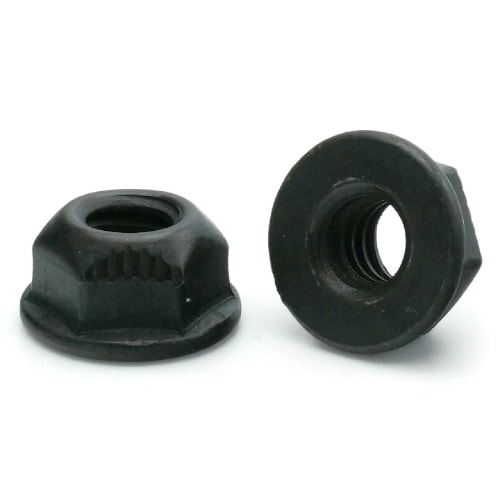
Prevailing Torque Flange Nuts—also called flange lock nuts, all-metal locking flange nuts, stover flange nuts, or self-locking flange nuts—combine two essential fastener functions into a single component: the load-distributing capability of a flange nut and the vibration-resistant locking action of a prevailing torque nut. These specialized fasteners are engineered for applications where reliable resistance to loosening is critical and where the convenience of an integrated washer flange reduces assembly time and part count.
What Is Prevailing Torque?
Prevailing torque refers to the resistance encountered when threading a lock nut onto a bolt, even before any clamping load is applied. This built-in friction is created by a deliberate interference in the nut's threads—either through a deformed or distorted thread section (all-metal design) or a nylon insert that grips the bolt threads. The result is a nut that resists back-off and loosening caused by vibration, thermal cycling, shock loads, and dynamic forces. Unlike free-spinning nuts that rely solely on clamping tension to stay tight, prevailing torque nuts maintain holding power even if the joint experiences partial relaxation over time.
All-Metal vs. Nylon Insert Locking Mechanisms
Prevailing torque can be achieved through different locking mechanisms, each suited to specific application requirements. All-metal prevailing torque nuts (such as stover nuts or top lock nuts) use a distorted thread geometry—typically created by crimping, elliptical deformation, or out-of-round shaping at the top of the nut—to generate thread interference. All-metal designs can withstand high temperatures, repeated reuse cycles, and harsh environments where nylon would degrade. Nylon insert lock nuts (nyloc nuts) use a polymer ring embedded in the nut to grip the bolt threads. Nylon inserts provide excellent locking performance at moderate temperatures but are limited to approximately 250°F (120°C) before the nylon begins to soften and lose effectiveness. When selecting a prevailing torque flange nut, consider the operating temperature, reusability requirements, and environmental exposure of your application.
Why Choose Prevailing Torque Flange Nuts?
Standard flange nuts—whether serrated or non-serrated—provide load distribution and surface protection but offer limited resistance to vibrational loosening on their own. Prevailing torque flange nuts solve this problem by integrating a locking feature directly into the nut, eliminating the need for secondary locking hardware such as lock washers, thread locker compounds, or safety wire. The integrated flange further simplifies assembly by acting as a built-in washer, reducing part count and ensuring consistent installed appearance. For high-vibration environments like automotive, heavy machinery, agricultural equipment, and industrial systems, prevailing torque flange nuts deliver reliable, maintenance-free performance.
Common Applications
Prevailing torque flange nuts are specified across industries where vibration resistance and secure fastening are non-negotiable:
- Automotive & Motorsports: Suspension systems, drivetrain components, exhaust assemblies, engine accessories, chassis hardware
- Heavy Equipment & Machinery: Hydraulic systems, structural frames, guards, access panels, vibrating equipment
- Agricultural Equipment: Tillage implements, harvester assemblies, loader attachments, PTO components
- Industrial & Manufacturing: Conveyor systems, motor mounts, pumps, compressors, process equipment
- Construction & Infrastructure: Structural connections, safety barriers, signage, equipment anchoring
Available Grades & Finishes
Albany County Fasteners stocks prevailing torque flange nuts in a variety of strength grades and finishes to match your application requirements. Browse our selection below to find the right combination of material, strength class, and corrosion protection for your project.
Need help selecting the right prevailing torque flange nut? Contact our team—with over 18 million fasteners in stock and decades of industry experience, we can help you find the perfect locking fastener solution.